English Reading, Learning to Read, Teaching Strategies

English Reading: Road to Fluency

One of my friends asked me the other day what my son is reading now (in English) because she wanted some ideas for her kids. This made me think that I should document the books Little Man read from when he was a beginning reader until now, as a reference for parents teaching their kids to read in English.

Background: I taught him English phonics between the ages of 1.5-3 years old, then taught him to read at 3 years 2 months old using the reading curriculum The Reading Lesson: Teach Your Child to Read in 20 Easy Lessons. It took us four months to complete it, by the end of which he could read at about first grade level.

From 3.5 y.o. on, we practiced reading increasingly longer and harder books (see our reading list below) and it took him approximately 12 months to become a fluent reader. What I mean by fluent is he can read without thinking/hesitating and can read books by himself that he’s never read before.
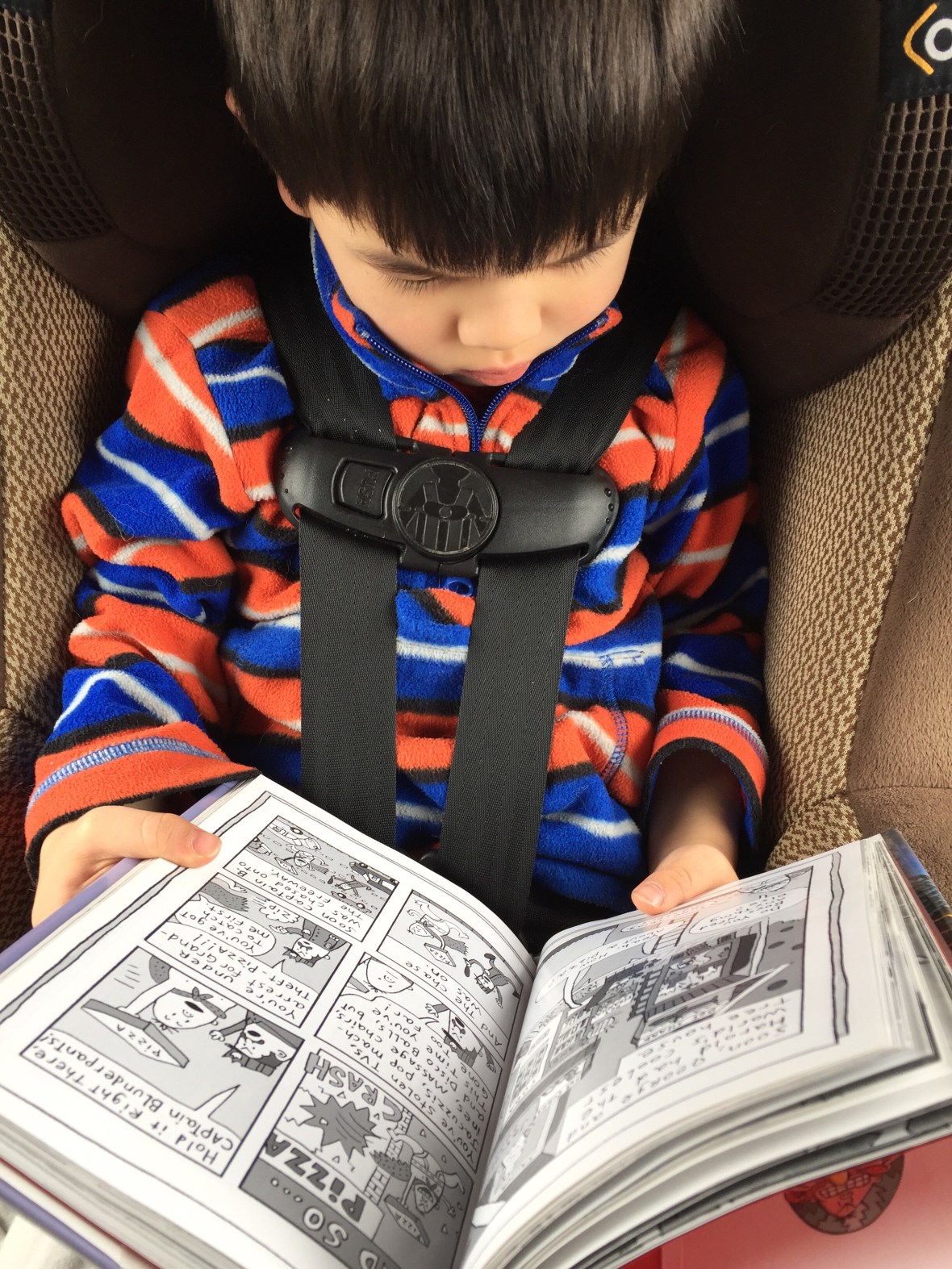
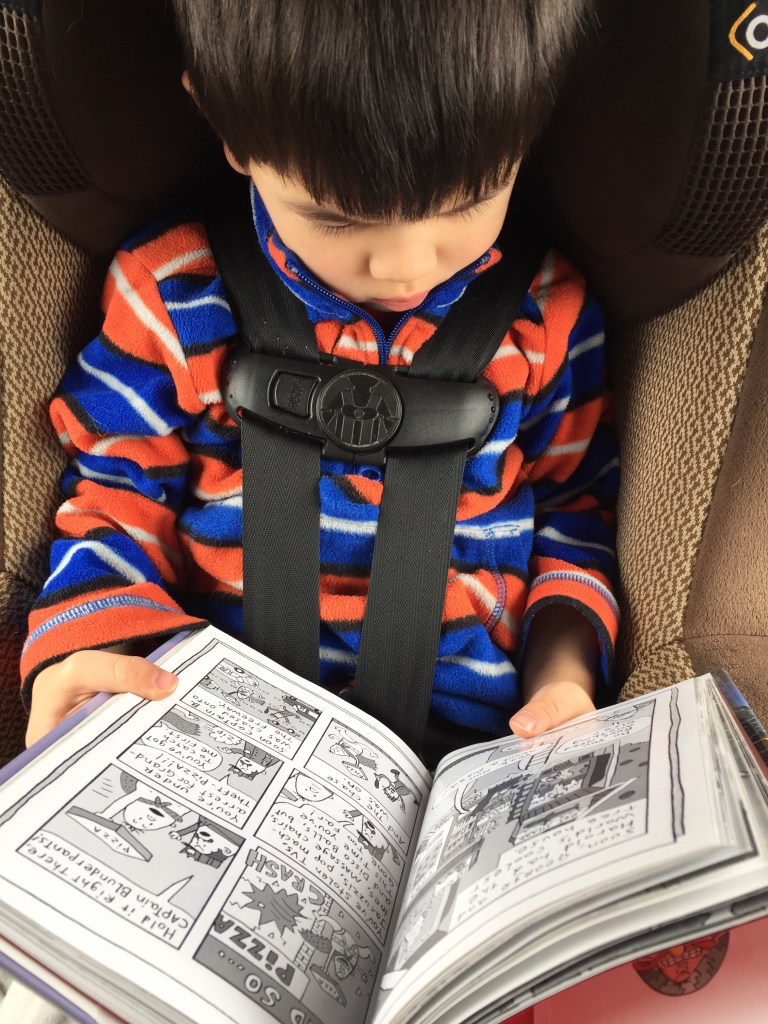
Around 4.5 y.o., he could read a few chapter books Magic Tree House and Boxcar Children but he did not really enjoy those. He then fell madly in love with Captain Underpants (and Super Diaper Baby and Dog Man by the same author), which skyrocketed his reading ability to around 3rd grade level.

Now at 5 y.o., he desperately wants to read “grown up” books like Harry Potter, which he has tried three times (unsuccessfully) to read. He is able to read the words but cannot comprehend the complex plot and flashbacks because he is after all only 5 years old.

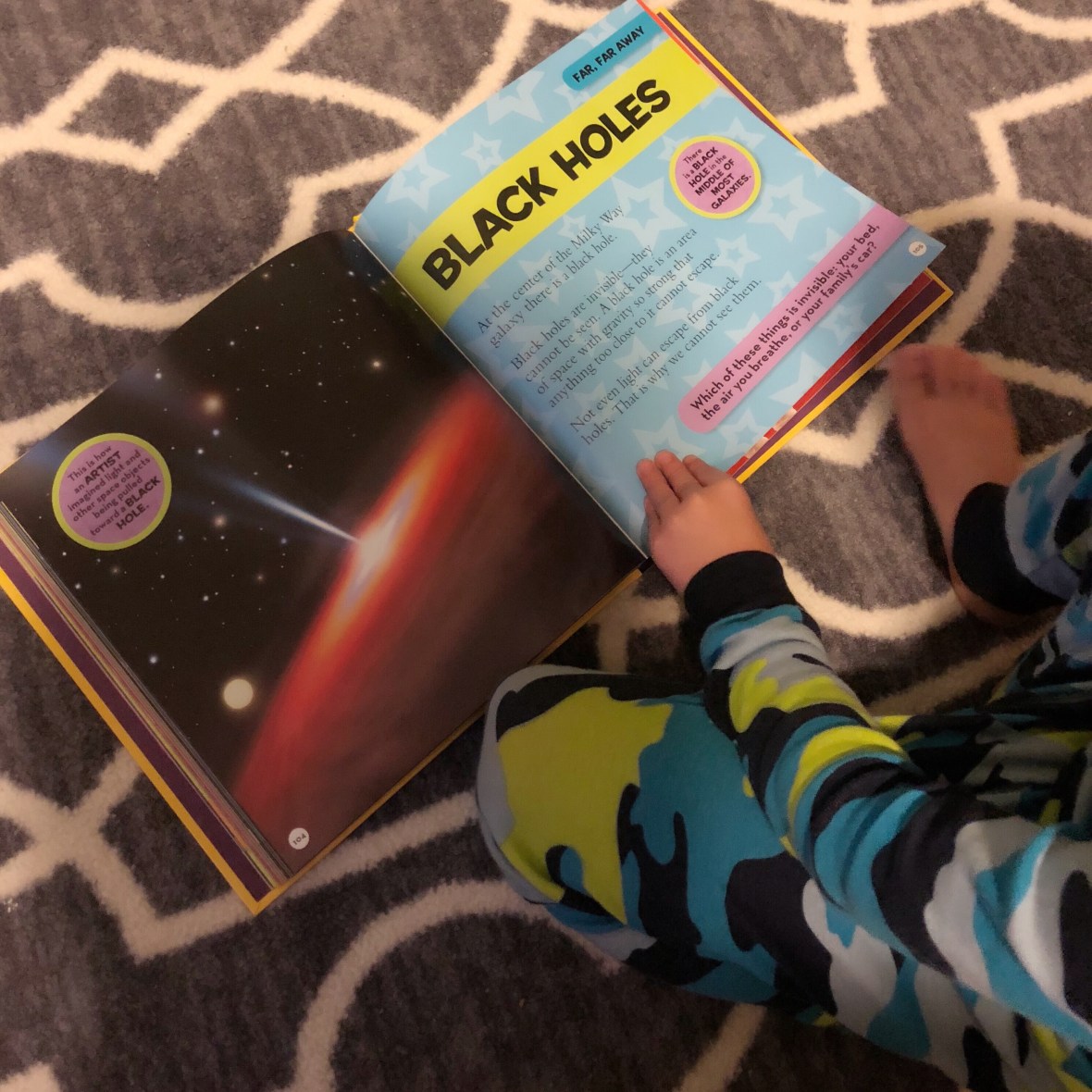
But, I am happy to report that he has now found a happy middle of reading books that are appropriate for his age and ability. I am absolutely thrilled that he has taken to reading non-fiction lately, which he has never shown interest before.
Back to what this post is about. Here’s a list of books that he read from 3.5-now. I don’t keep track of all the books he read, but these ones stuck out in my memory as being significant. FYI just borrow the beginning readers (BL 0.7-1.7) from the library. Libraries have hundreds of beginning readers and they are not worth buying IMO because 1) the stories are dumb, and 2) they get outgrown quicker than you can blink.

ATOS Book Level are shown in parenthesis, e.g. 0.7 level means can be read by a typical kindergartner in the 7th month of school, 1.2 means 1st grade 2nd month. I find ATOS levels to be inflated and always mentally take a year or two off. For example, Magic Tree House is listed as a 2.6 but most kids I know read it around K-1st grade.

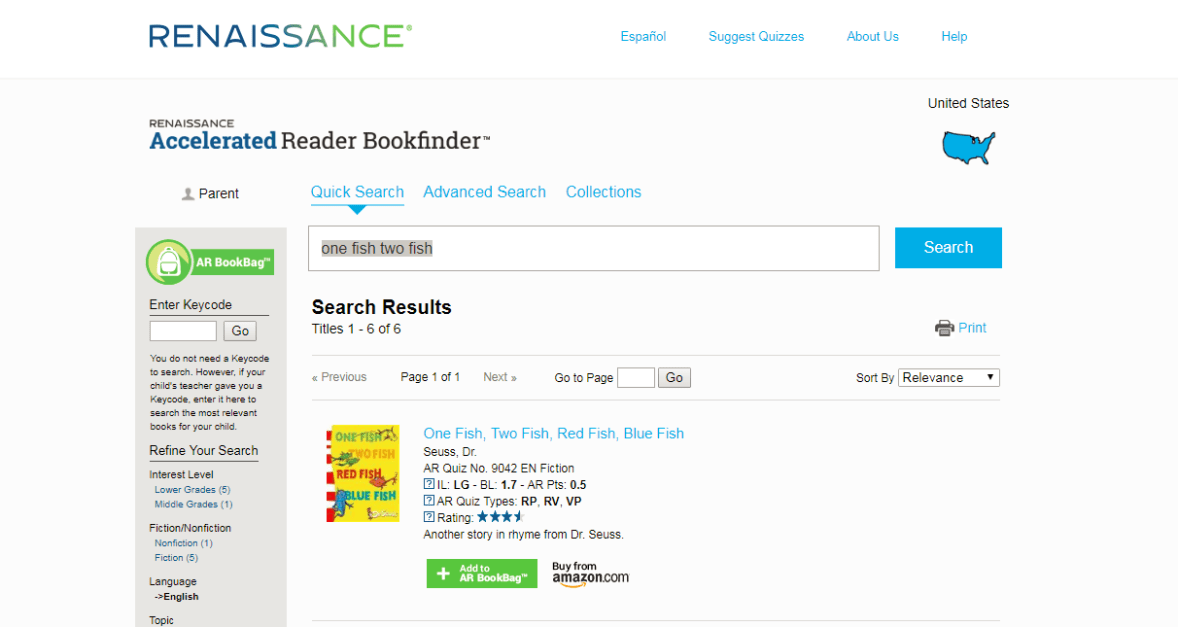
To find the ATOS book level (BL) of any given book, go to this website and search the title. As you can see, “One Fish Two Fish” is listed as BL 1.7.
Capture.PNG

Some publishers (e.g. Usborne) provide Lexile measures instead of ATOS. They can be converted using the chart here, e.g. Lexile of 440 corresponds to ATOS 3;0.

Books Little Man read, in order of difficulty:

Starfall Learn to Read (N/A)

Scholastic Sight Word Tales (N/A)

I Can Read, Step Into Reading, Scholastic Level 1 and Level 2 readers (BL: 0.7-1.7)

Elephant and Piggie series (BL: 0.7-1.1)

Dr. Seuss Beginner Books series (BL: 1.2-1.7)

Dr. Seuss I Can Read It All By Myself series (BL: 1.5-2.1)

DC Super Friends Story Collection (BL 1.2-1.6)

Fly Guy series (BL 1.2-1.7)

Lego DC Comic Readers series (BL 2.4-2.8)

Katie Woo series (BL 1.9-2.2)

Amazing Adventures of Superman series (BL 2.7-3.1)

Nate the Great series (BL 2.0-3.1)

National Geographic Readers (BL 2.9-3.9)

Magic Tree House series (BL 2.6-3.3)

Captain Underpants series (BL 4.3-4.7)

Dog Man series (BL 2.6)

Where the Sidewalk Ends (N/A)

Wayside School series (BL 3.3)

Currently reading: 

Usborne One Hundred Illustrated Stories (BL 4.1)

Usborne Stories from Around the World (BL 3.1)

Usborne Non-Fiction Beginning Readers (BL 2.9-4.5)

National Geographic First Big Book of Space (BL 4.1)

Random Notes:

  1. There is no point in pushing too high of a reading level. This is because books that are of higher reading levels are often of inappropriate content for young children. It appears to me that 3rd grade reading level is where he will stay for a while and it will not get any higher than that because he cannot comprehend even though he can read it.
  2. On the other hand, I caution you about waiting too long to teach your child to read because early readers have really dumb storylines like “A wig on a pig”, “The cat in the hat”, etc. An older child will find it extremely frustrating when they want to read more interesting books but their ability only allows them to read baby books. (Little Man currently has this problem in Chinese which he is very frustrated by).
  3. I’ve always tried to get him interested in non-fiction but failed. A few weeks ago, he suddenly picked non-fiction and now loves to tell me facts that he learned from books. JOY OH JOY!! Goes to show sometimes you just have to be patient and wait for time and development to take its course.
  4. The most important factor is to hook your child by finding books he/she absolutely loves. Looking back, he made huge jumps in reading ability when he encountered certain series that were highly motivating, like Lego DC comic books (jumped from 1st to 2nd grade) and Captain Underpants (jumped from 2nd to 3rd grade).
  5. Because of the huge selection of English books available (sadly not so for Chinese), you can easily find books of your child’s interests at different reading levels. E.g. He loves DC superheroes and I found K, 1st, 2nd grade level superhero books by searching on Amazon.
  6. He slowly became able to read everything around him like signs, recipes, instructions etc., a process that took around 12 months and I don’t think can be rushed. And this is in his first language English! I wonder how long Chinese fluency will take.
  7. Listening to audiobooks (or adult reading aloud) helped my son bridge to chapter books because he was already familiar with the stories. He loved the audiobooks: Where The Sidewalk Ends, Nate the Great, and Sideways Stories From Wayside School. Unfortunately, due to our focus on Chinese in recent months we do not listen to English audiobooks anymore. 😦
  8. He is now independent in English reading (except for the occasional word) and I only read to him in Chinese. He keeps wanting to read “grown up” books I keep assuring him it’s ok to read picture books. We’ve found a compromise with Usborne story collections which he likes because they are thick and “grown up looking” and I like because he can comprehend the stories. Joke books, poetry collections, comics are also a good fit for him now.
  9. I have an ongoing struggle with getting him to read more. He is not a natural bookworm like some kids are, and rarely picks up books on his own. We have mandatory reading time in the morning and evening, and he recently made up his own rule that he gets evening screen time if he reads 100 pages that day. I have no problem with this!

Anyway, I hope this is a helpful starting point for you. The key to English reading is simply to 1) teach your child to read (phonics) and then 2) keep reading longer and harder books until you achieve fluency. I’d like to think that Chinese will be a similar process but the problem with Chinese is no book levels so I have to make my own guesstimates for book levels. This is the current pain in my neck!!!!

I don’t claim to be any form of expert in English or Chinese reading. Just sharing our experience with you — take of it what you will. As always, I try to be objective in my information and not humblebrag too much. 😛

{Follow me on Facebook and Instagram to stay updated on my blog posts}
Preschool Reads

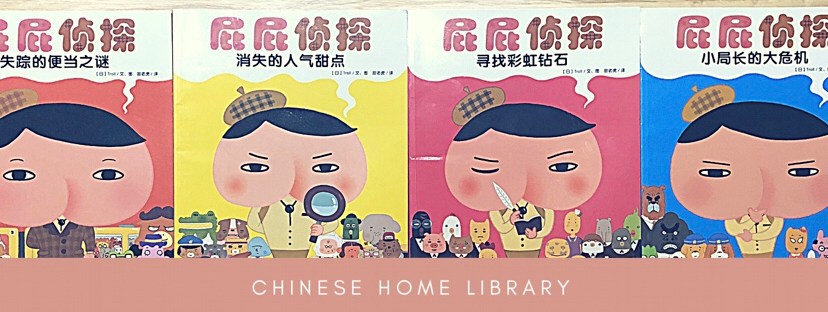
Preschool Reads:《屁屁侦探》Butt Detective series

Mystery is my #1 favorite genre. From Enid Blyton’s Five Find-Outers and Famous Five to Encyclopedia Brown and Agatha Christie… Even now as an adult I still love whodunnits!

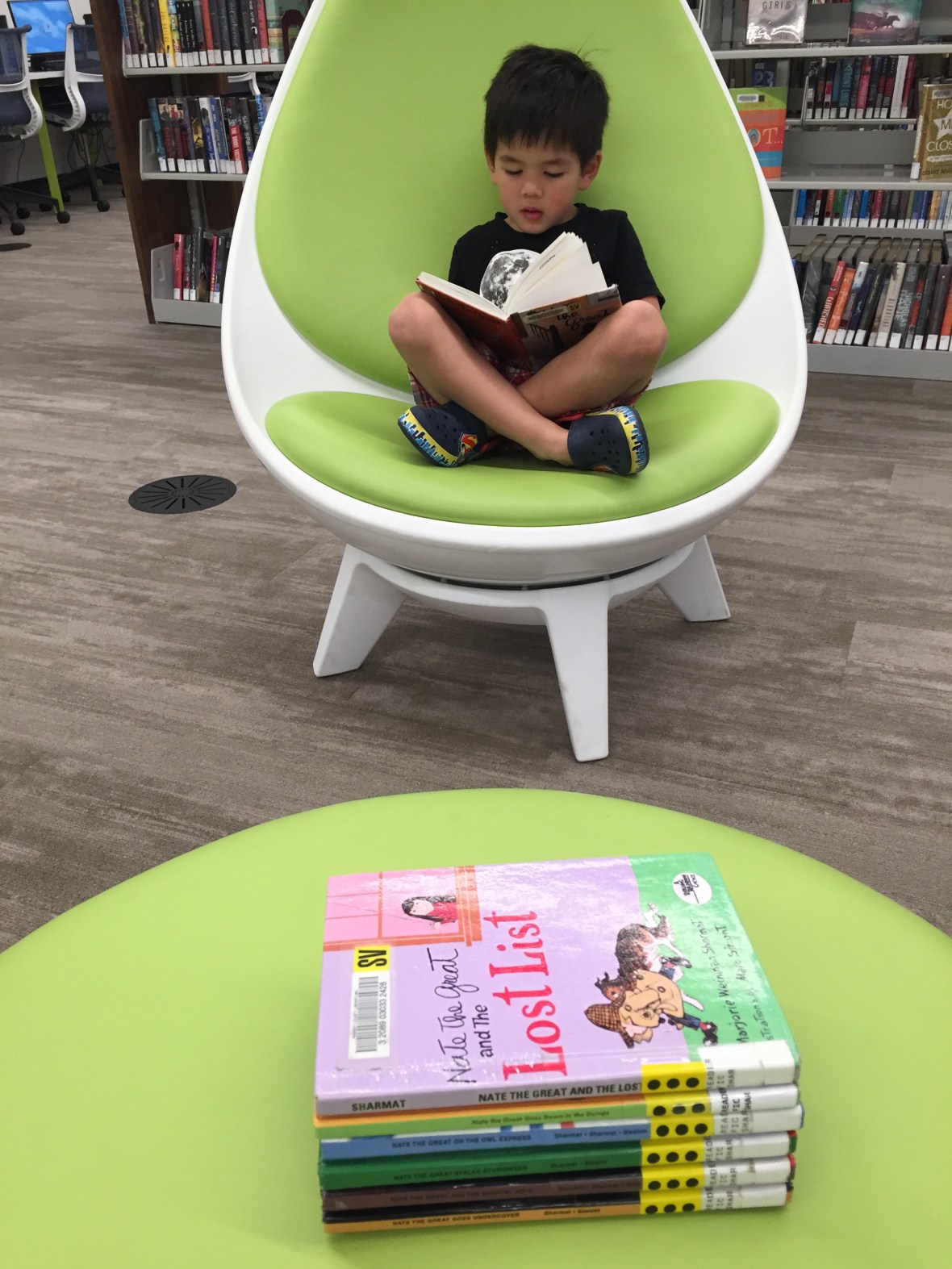
I’d like to share my love for mysteries with my son but they are rare for this age group. He LOVED Nate the Great (in English) when he was 4.5:

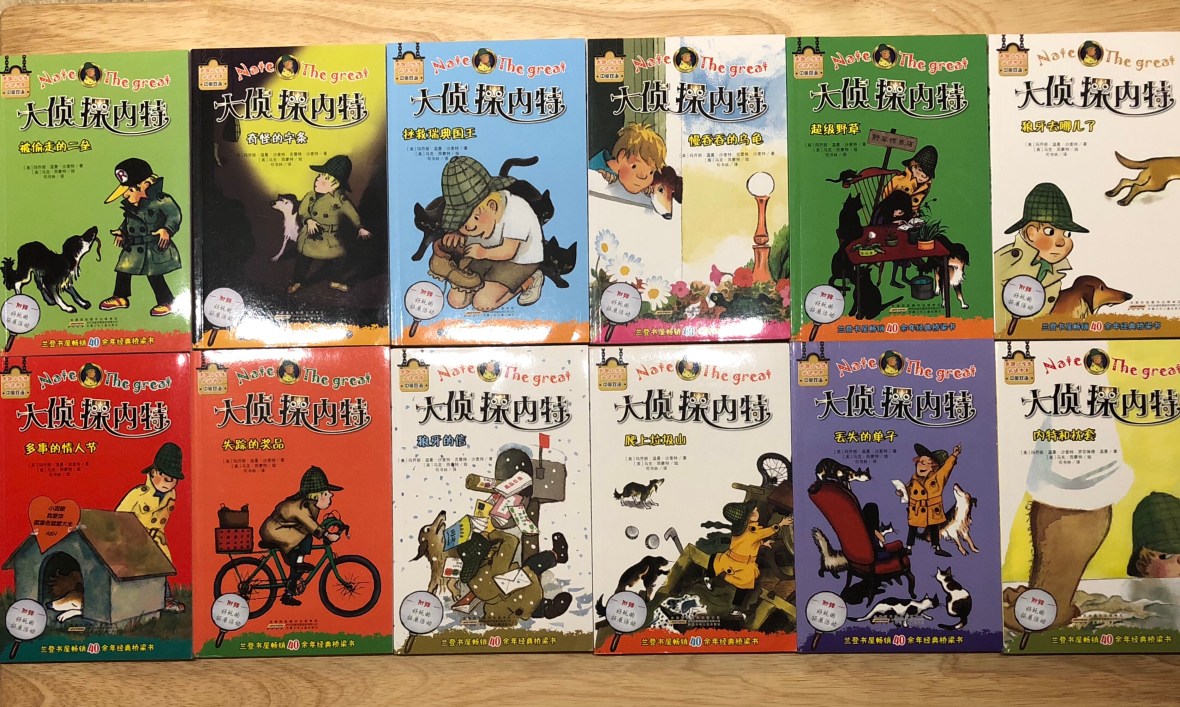
So I bought him this lovely set of bilingual Nate the Great books:

Alas, these continue to be unread, untouched, and unloved to date. I learned the hard way that Little Man refuses anything in Chinese that he’s already read in English. 😕

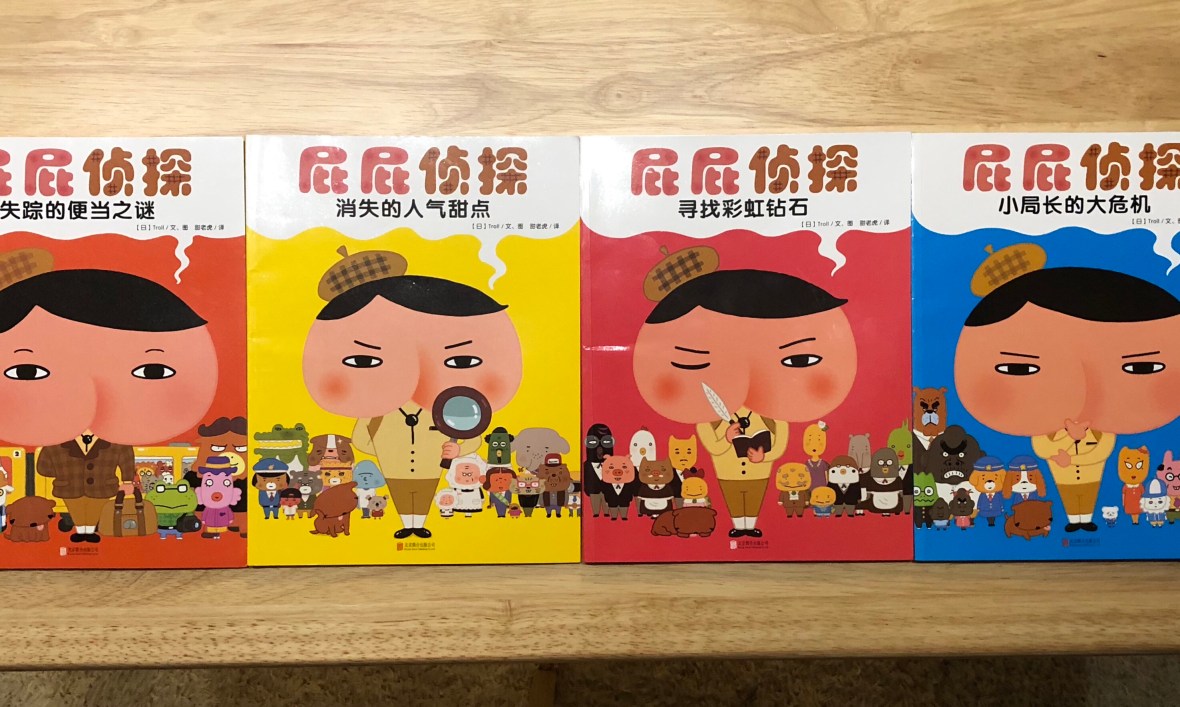
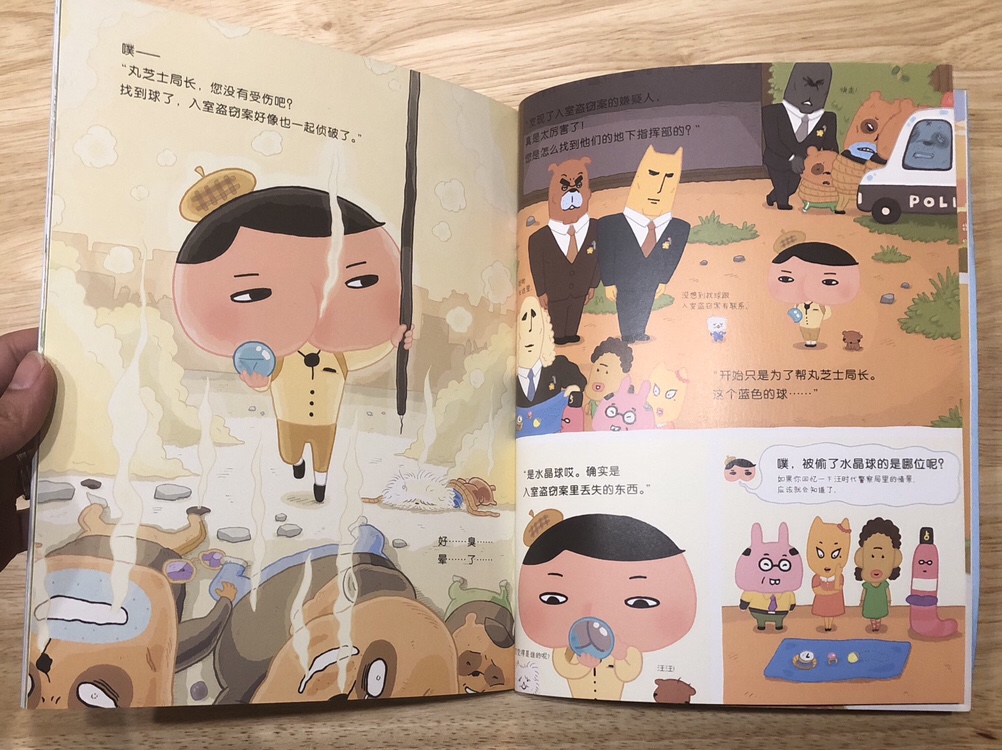
The only other detective series I’ve found for preschoolers is… 屁屁侦探 (Butt Detective)! Thank you to the mom who recommended it to me as one of the books her 5 y.o. daughter loves. Little Man loves them too because who doesn’t love a butt-faced Detective??!

The Simplified Chinese version comes with four books (for some reason in Traditional Chinese there are FIVE books, there is a black one that is not available in Simplified. WHY?!). Each book has a kid-friendly mystery like missing ball, stolen treats, etc. and you help Butt Detective solve them by looking for clues.

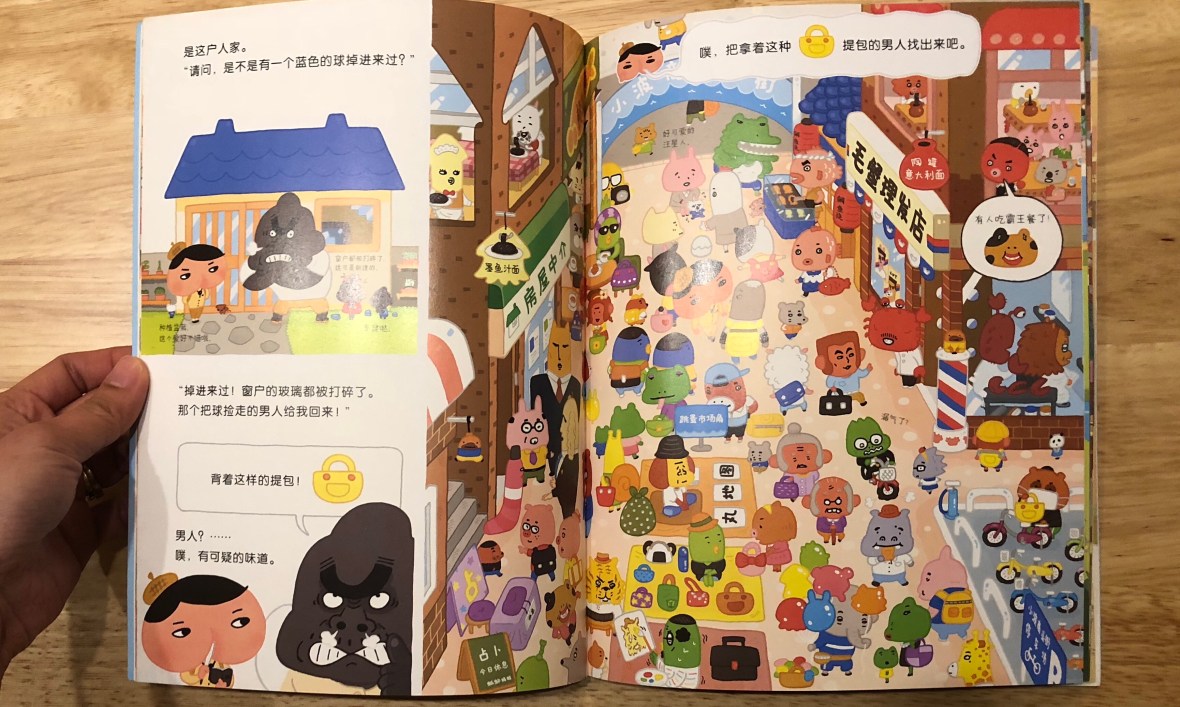
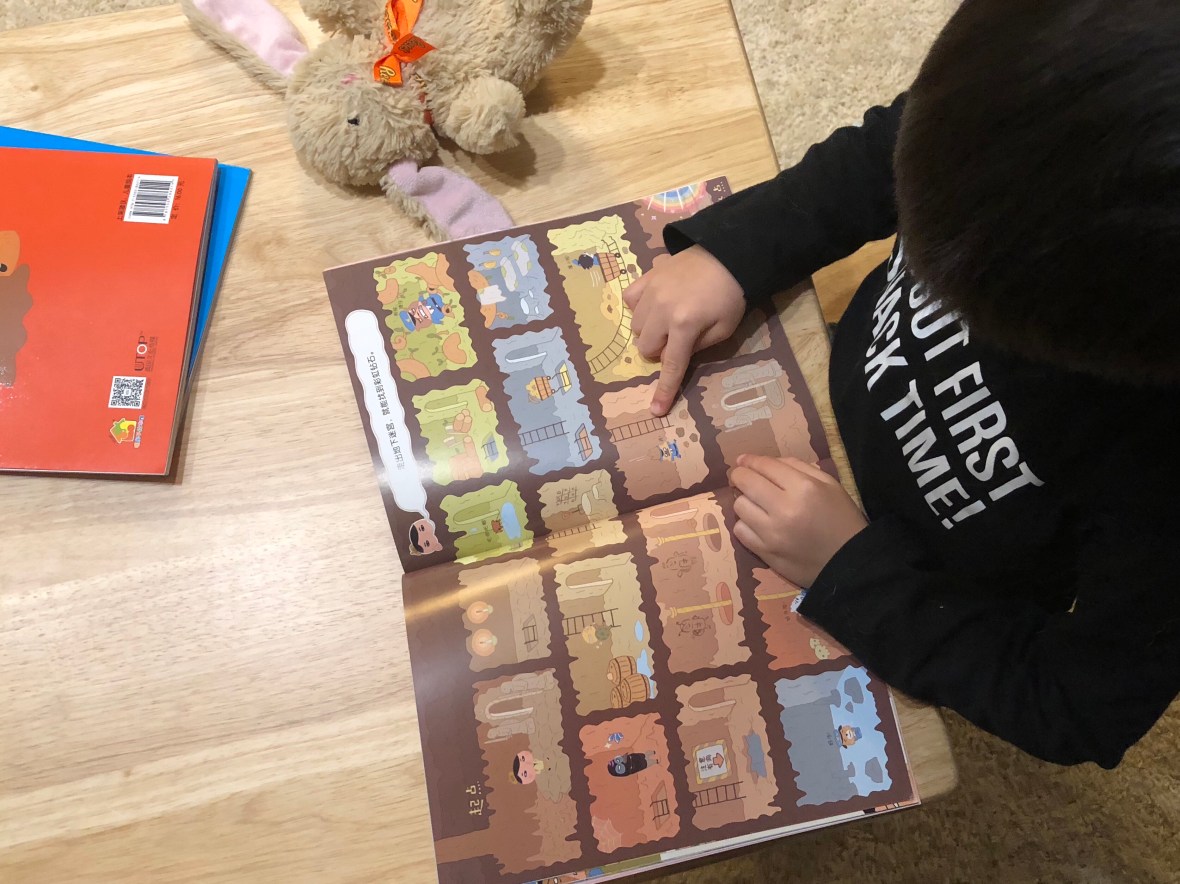
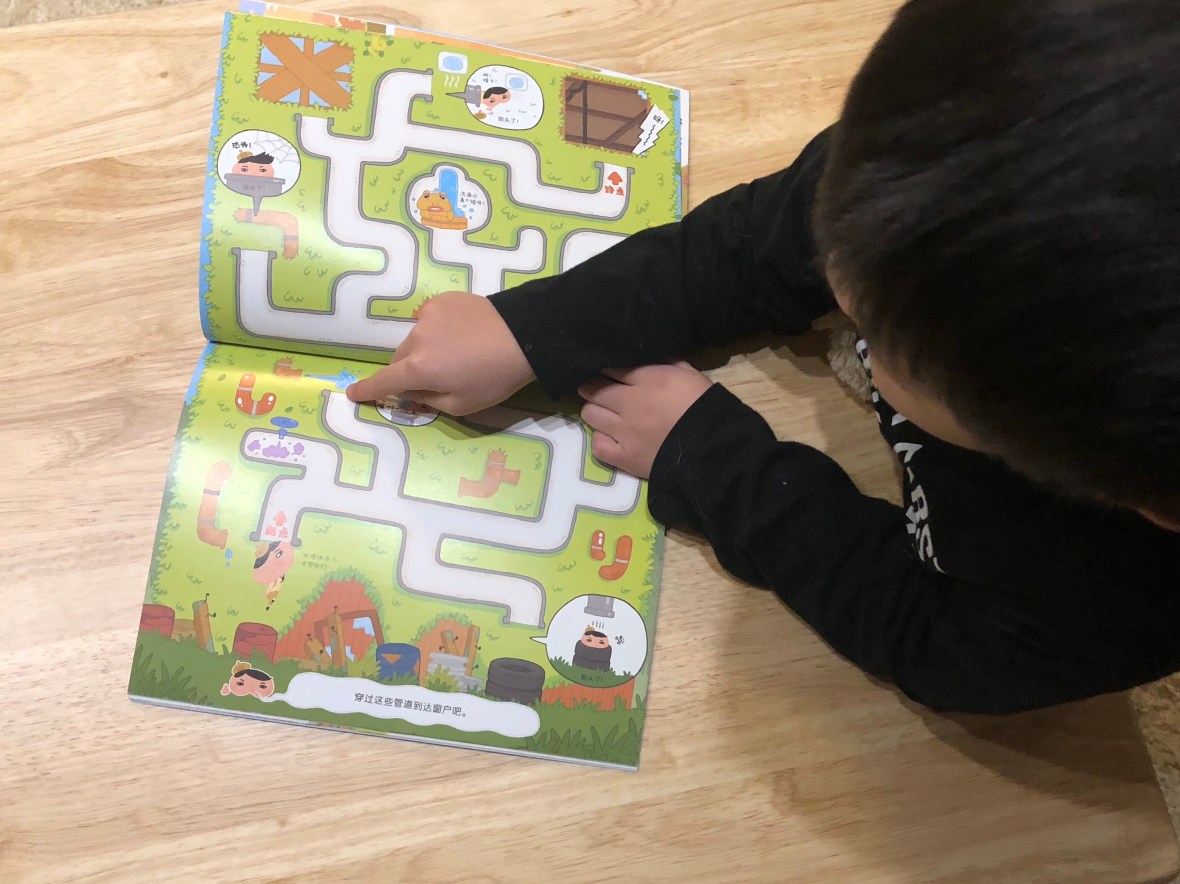
Every page is fun and interactive as it has an “I Spy” or a maze. The illustrations are typical Japanese style – very cute!

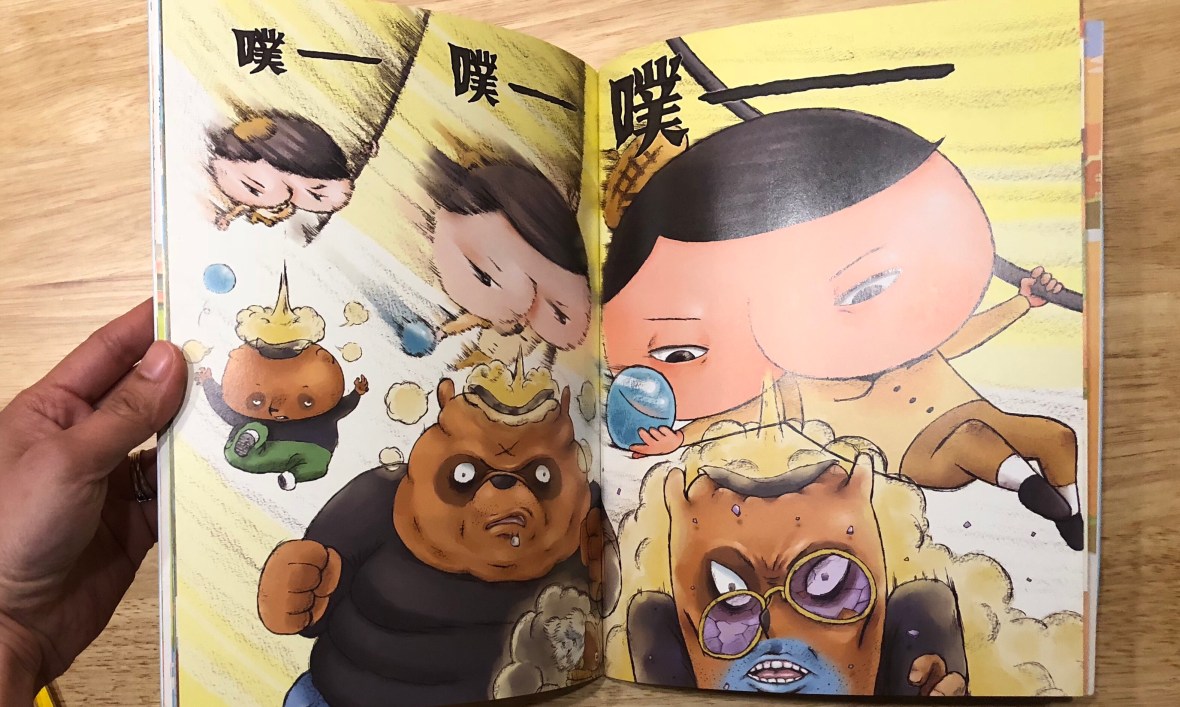
Of course, the best part is when Butt Detective catches the bad guy, he makes a big stinky fart (噗 is pronounced pū. I learned this character from reading this book) and the bad guy faints from it.

I love this series because it introduced Little Man to a lot of detective vocabulary like 委托人 (client), 案件 (case), 可疑 (suspicious), 线索 (clues), 绑架 (kidnap) and many other words that he did not know before. These books look deceptively simple but actually have a lot of advanced vocabulary. Really good for building Chinese language skills. 🙂

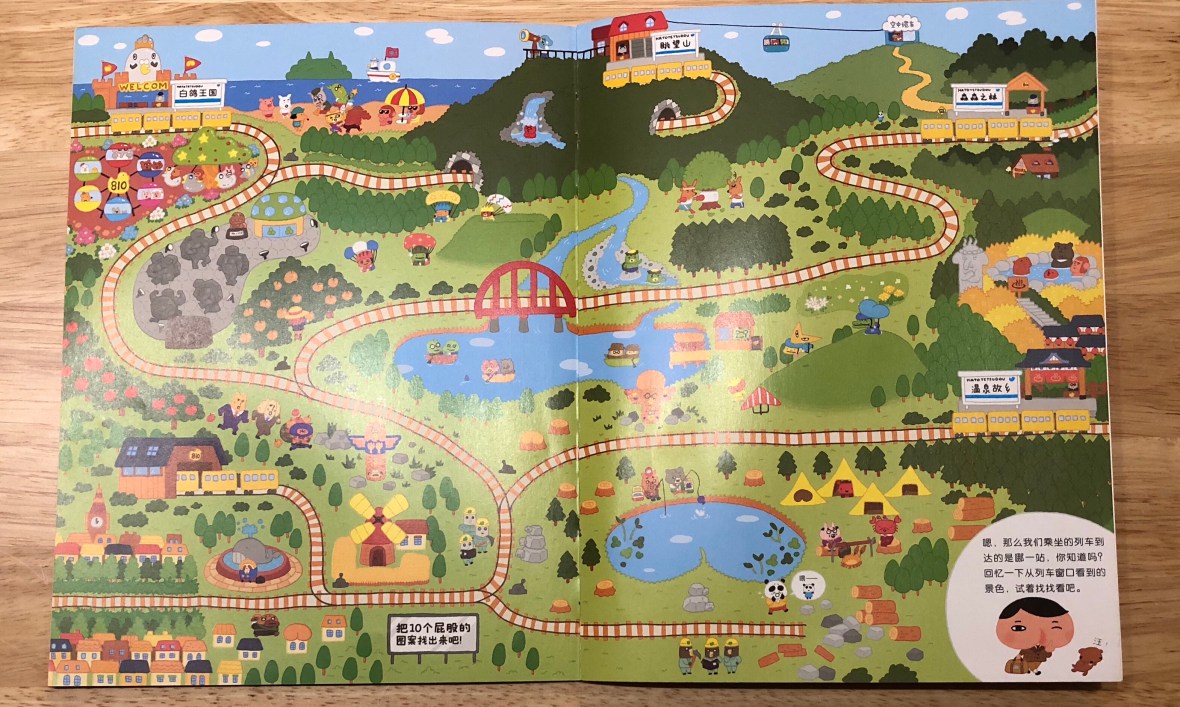
This is Little Man’s favorite page… finding 10 butts in the picture. If you enlarge the picture, you’ll see that it says “把10个屁股的图案找出来吧!” 😂

I really want to find more mysteries appropriate for young children. Please share if you know any!

Buy from: Taobao (you know this is where I get everything) or Maha Yuyi in Singapore

{Like and follow me on Facebook and Instagram}

Chinese Resources, Online shopping

How to Buy Books from Taobao When You Can’t Read Chinese

Honestly I don’t know if it’s advisable to purchase from Taobao if you don’t know Chinese. Several people asked about using Google Chrome Translate and I think it is possible but proceed at your own risk!

If this is your first time buying from Taobao, here’s some tips:

  1. Limit yourself to $20-30. That way even if you screw up, the worst that could happen is you’re out $30.
  2. Buy from just 1-2 sellers. One seller would be the best because then the chances of screwing up are less.
  3. The prices fluctuate. Taobao is like Amazon in that prices can fluctuate every day, sometimes by $10 USD! I usually add a bunch of stuff into my shopping cart and monitor prices over time. There is usually a sale once a month.
  4. Have a Chinese-speaking friend who can translate for you in the event that the seller texts you in Chinese and expects you to text them back in Chinese. This happens about 30% of the time, so pretty often.
  5. Expect to pay more for shipping than the items. You won’t know how much international shipping costs when you first purchase the items. Estimate international shipping to cost around 1.5-2x the price of the items, e.g. if your items cost $30, shipping might cost $45-60. Mentally prepare yourself for this so you don’t get sticker shock when it comes time to pay for shipping! Because the books themselves are SO cheap, it will still be completely worth it. (E.g. Little Bear books cost $5, say shipping costs $10, the total is still only $15 compared to the $50 you’ll pay if you buy them within the USA.)
  6. Getting book sets will save you the most. They are cheap and I get the whole series one fell swoop. Win. 🙂
  7. The first time is the hardest. Don’t worry it gets much easier after the first time. Taobao will become your best friend and you can join me in the #taobaoaddicts club.

Ok are you ready? I even set up a new TB and Alipay account so I can show you how it’s done.

What you need:

  1. Smartphone with Taobao app
  2. Computer with Google Chrome
  3. Visa credit card
  4. Patience 😉

You can do the first part of the process on the computer using Google Chrome but you will still need the app. For whatever reason sellers can only text you via the app. You will not get the messages if you log in on the computer. I don’t know why, I’ve tried. If you don’t respond to their text messages then your items may not get mailed out or will get returned or whatever. The app is of course only in Chinese, which is why I said hopefully you have access to a Chinese-speaking friend you can ask for help if you need it. 😛

Step 1. Open the Taobao website on Google Chrome

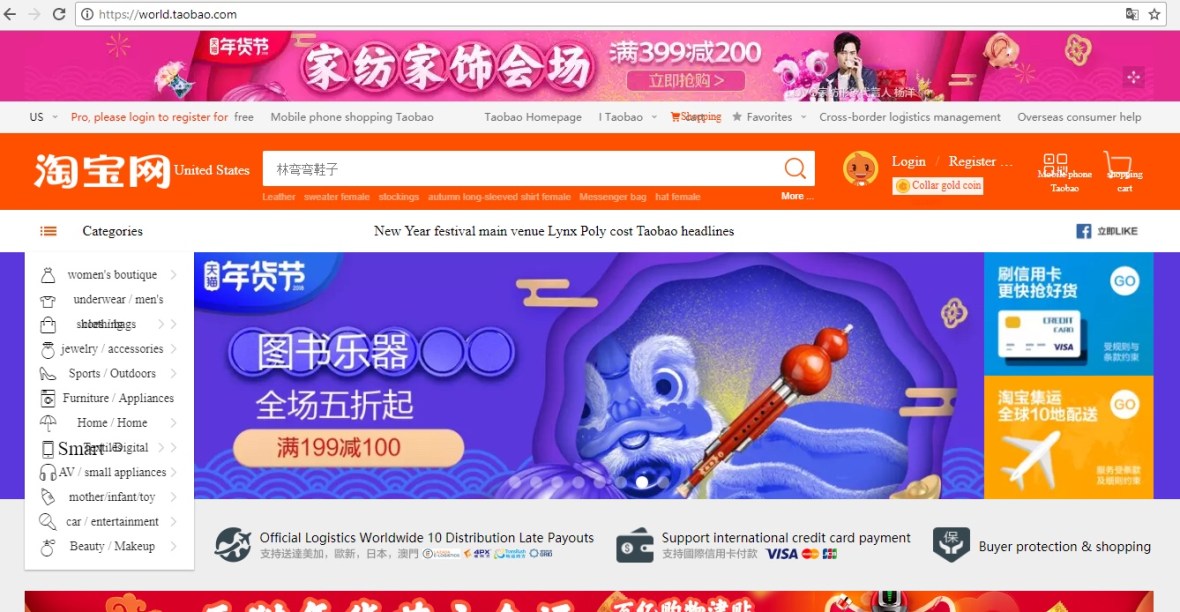
If you in the USA it will automatically take you to the World Taobao website and display prices in USD. On the top right corner of your browser you can click the little symbol (to the left of the star) to translate the whole website into English and it will look something like this:

tb1

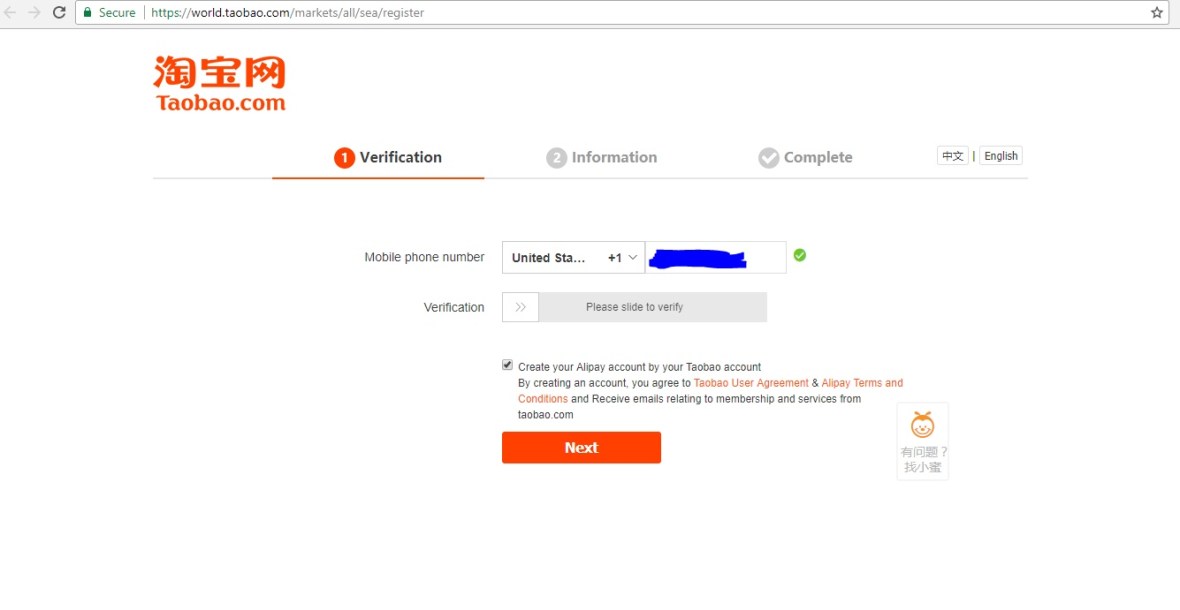
Step 2. Register for an account

Click on “Register”, enter your phone number, and type in your verification code when you get it.

tb2

On the next screen, type in the following information:

  • Line 1: Country 美国 (USA)
  • Line 2: Full address
  • Line 3: Zip code
  • Line 4: Name
  • Line 5: Cell phone number
  • Line 6: Phone number

Click to checkmark the box to use this as your default address, then click the button “保存” to save.

tb4

Step 3. Add items into your shopping cart

This post assumes you already know what you want to buy. If you don’t know what to buy, please refer to my other posts about Buying Books from Taobao, Book Reviews, Chinese Resources, How to Choose Books, etc.

Like I said, if this is your first time, try to stick to buying from one TMall (天猫) bookstore. TMall (shown by the symbol of little red shopping bag and black cat) are bigger companies and less risky. In my example below I’m buying from three different TMall bookstores because I’m a Taobao pro. 😛

These are the TMall bookstores I’ve bought from with good selection of children’s books and high ratings:

It is pretty easy to get free domestic shipping. Most sellers offer “免邮” (free shipping) when you meet minimum purchase of 48 yen (around $7 USD).

Step 4. Select your international mail carrier

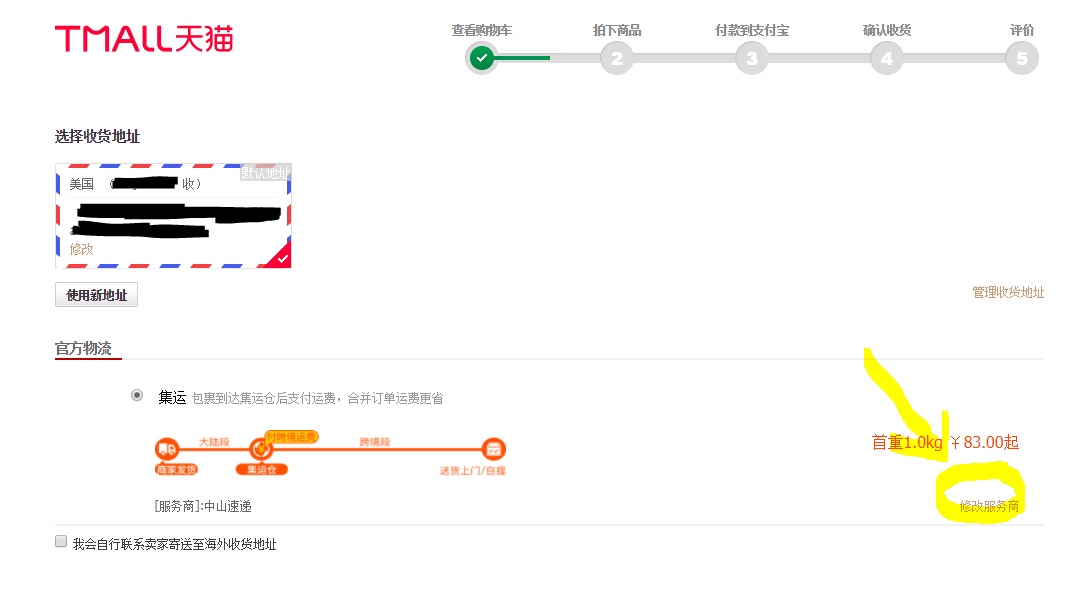
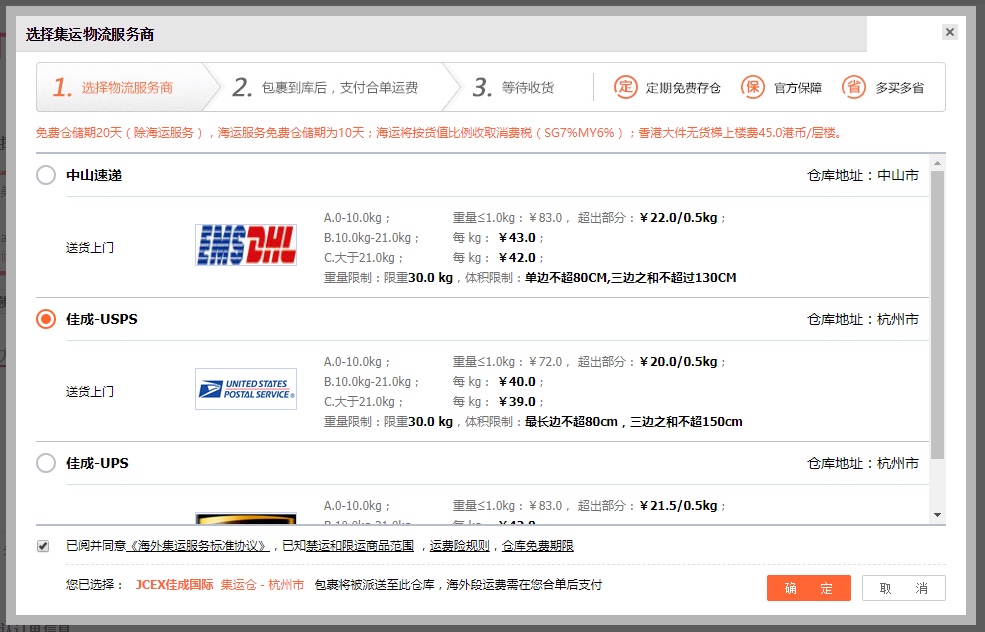
You have three choices for your international mail carrier: EMS (default), USPS or UPS. This is the company that will collate your items for you in their China warehouse and mail them to your US address.

I always choose USPS because they are the cheapest, fast, efficient and package the items pretty well. I’ve had bad experiences with EMS so I do not use them anymore and I’ve never tried UPS.

If you don’t change the international mail carrier, it will automatically use EMS. If you do want to change it, then click on “修改服务商” and select USPS. For USPS, the first 1kg is 72 yen and every next 0.5kg is 20 yen, meaning the more you buy, the more you save on shipping. For this reason, I usually wait until I have several things I want before making a purchase.

In this example I am purchasing 17 paperback picture books, 2 hardcover picture books and 2 paperback textbooks.

tb5tb6

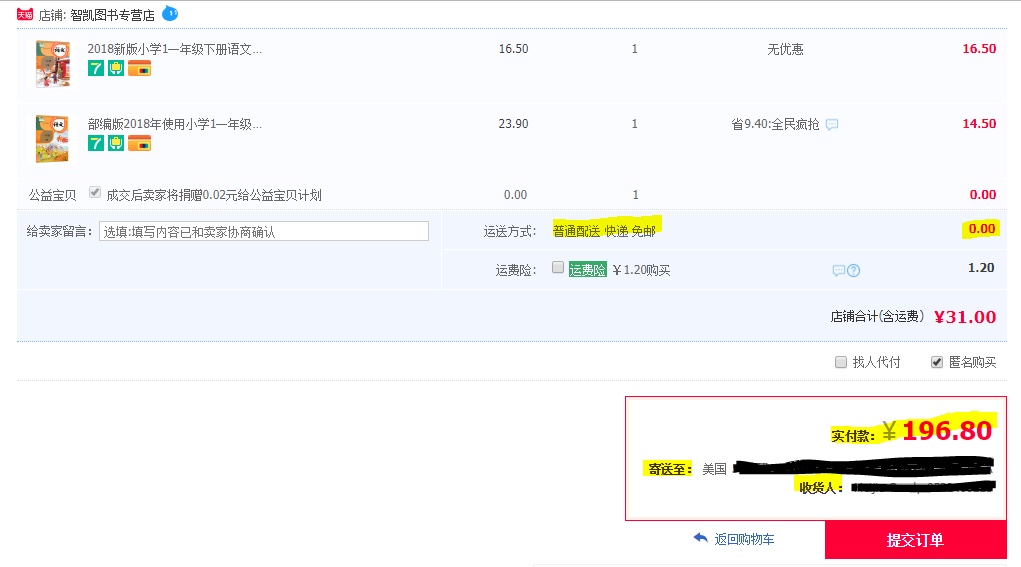
After changing your mail carrier, check that your items are correct, your address is correct, then click the red button “提交订单 (confirm order).

tb8

Step 5. Set up Alipay account

You will then be taken to the payment screen to set up Alipay, which is the China version of Paypal. Think of a 6-digit PIN number with no repeating numbers, then type it in twice in the blank spaces shown. Remember your PIN number. You will use it a lot.

Click to checkmark the box to agree to their terms and conditions, click the orange button to confirm.

tb9

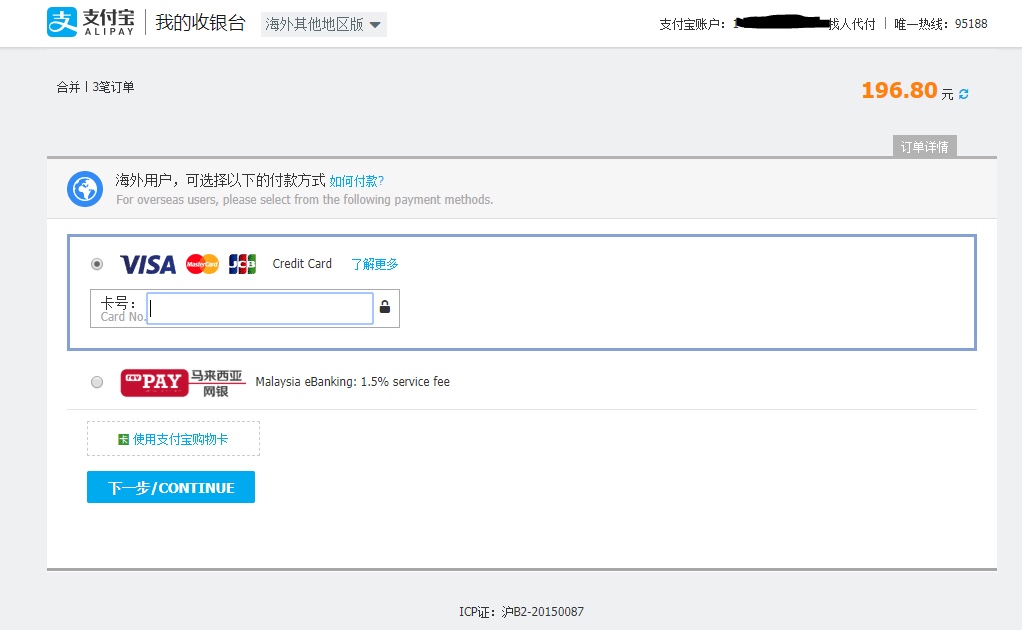
Step 6. Enter your Visa card number

I did not have any difficulty with this step, although I was taken to a separate verification screen for my Wells Fargo card. If you are having trouble with this, either try a different card or call your bank. Sometimes credit cards get declined due to fraud prevention.

tb10

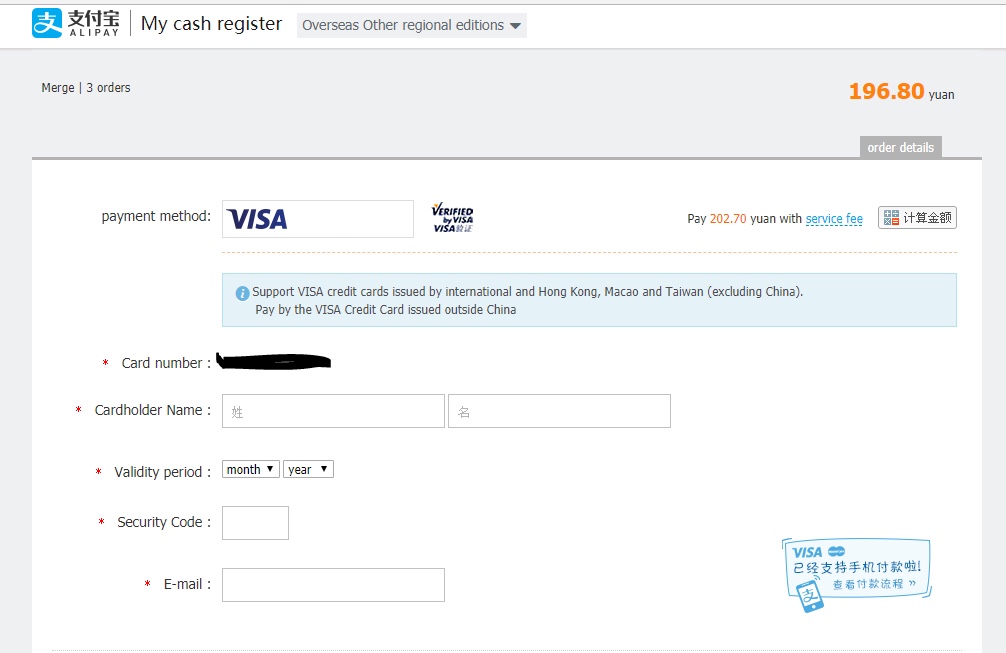
On this next screen, IMPORTANT!!!! NOTE!!!! Under “cardholder name”, enter your Last Name in the first space, First Name in the second space. 

tb11

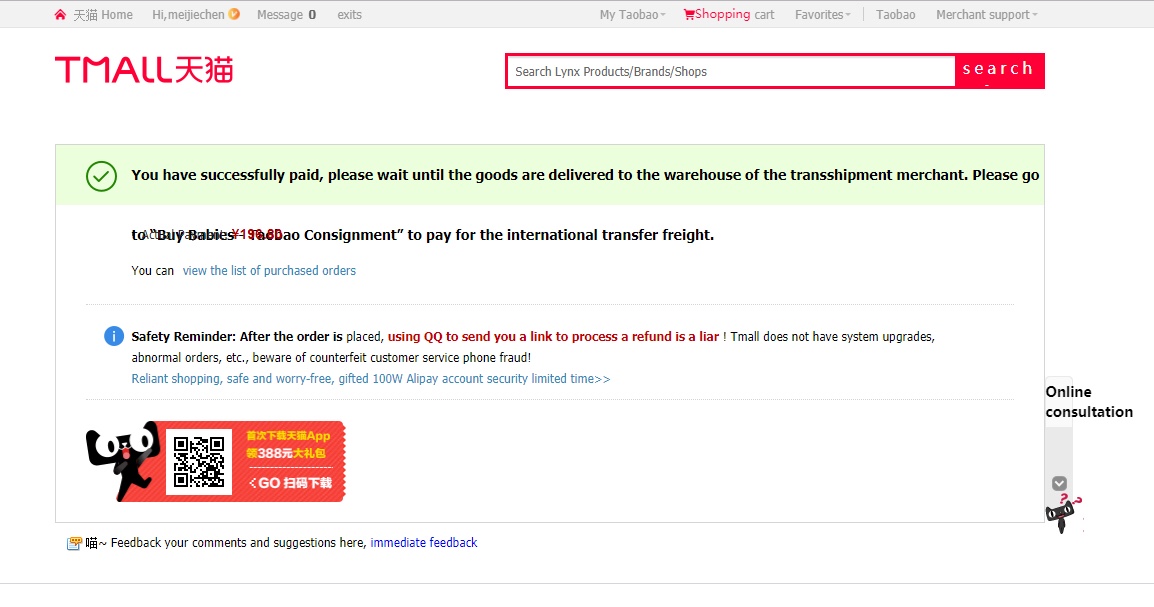
Step 7. Success! 

Hopefully you will be taken to this screen. Do a little dance for finishing Part I. It’s not over yet though.

tb12

Step 8. Download the Taobao app and log in.

The second I logged into the app, I received a message from each of the three sellers asking me to confirm my order and address. Click on “确认” (confirm) for all of them.

img_1467

Step 9. Wait for your items to arrive at USPS warehouse

OPTIONAL: Over the next couple of days, the sellers will mail out your items and you can check the status on your app. If you click on “我的淘宝” (the little person on the bottom right corner), your items will be shown under “待发货” (the briefcase looking thing) when they have not been mailed out. They will move to “待收货” (delivery van) when they have been mailed out and you can click on the delivery van to track your package.

You don’t have to obsessively check on the status unless you want to. The app will send you a message when the item has been signed for at the warehouse “订单已签收”, and send you a 2nd message when your item is safely deposited at the warehouse and you need to pay for international shipping “您的包裹已入库,点击支付海外段运费”.

img_1613

Wait for all of your items to arrive at the warehouse before you pay for international shipping. Since I bought from three sellers I had to wait for three packages to arrive. They can combine up to twenty packages for you! Do this only when you’re a TB expert.

Step 10. Pay for international shipping

When your items have been accepted at the warehouse, the option “合并转运” will pop up:

img_1529

In this screenshot below, you can see that two of my items have arrived but one (in the middle) has not.

img_1571

A few days later, the third package arrived. Now I have the option to pay for international shipping for all of them. When I select all of them, it shows that the package weight is 3.62kg and shipping costs 192 yen ($30.47 USD).

img_1588

Click on the orange button “运费结算” (calculate shipping) and you will be taken to the payment screen. Then click the orange button “确认订单” (confirm order) and pay via Alipay.

img_1589

Step 11. You’re DONE!

Sit back, relax and wait for your package to arrive! In a few days, it should show on your Taobao app that USPS has sent your package on its way and its tracking number. There’s nothing else to do except wait for it to show up on your doorstep in about two weeks.

img_1601-1img_1596-1

Stats:

  • Total number of books: 19 paperbacks + 2 hardcover
  • Cost of books: $32.97
  • Cost of shipping: $31.36
  • Total cost: $64.33 ($3.06 per book)

Timeline:

  • Order placed on: Jan 29, 2018
  • All items arrived at USPS warehouse and I paid for shipping: Feb 1, 2018
  • Package dispatched from USPS warehouse: Feb 2, 2018
  • Package arrived at my home (USA): Feb 21, 2018

Wow that was a long post. Hope it helps!

You can contact me via FB Messenger on my page Hands-On Chinese Fun if you have any questions.


Chinese Resources, Reviews

Chinese Resources: Sticker Books

There are so many things to consider when buying Chinese materials for your child:

  • Chronological age
  • Language age
  • Interests and personality
  • Laziness level of parent 😝

If you’re a lazy parent like me then I have just the thing for you: Sticker books!

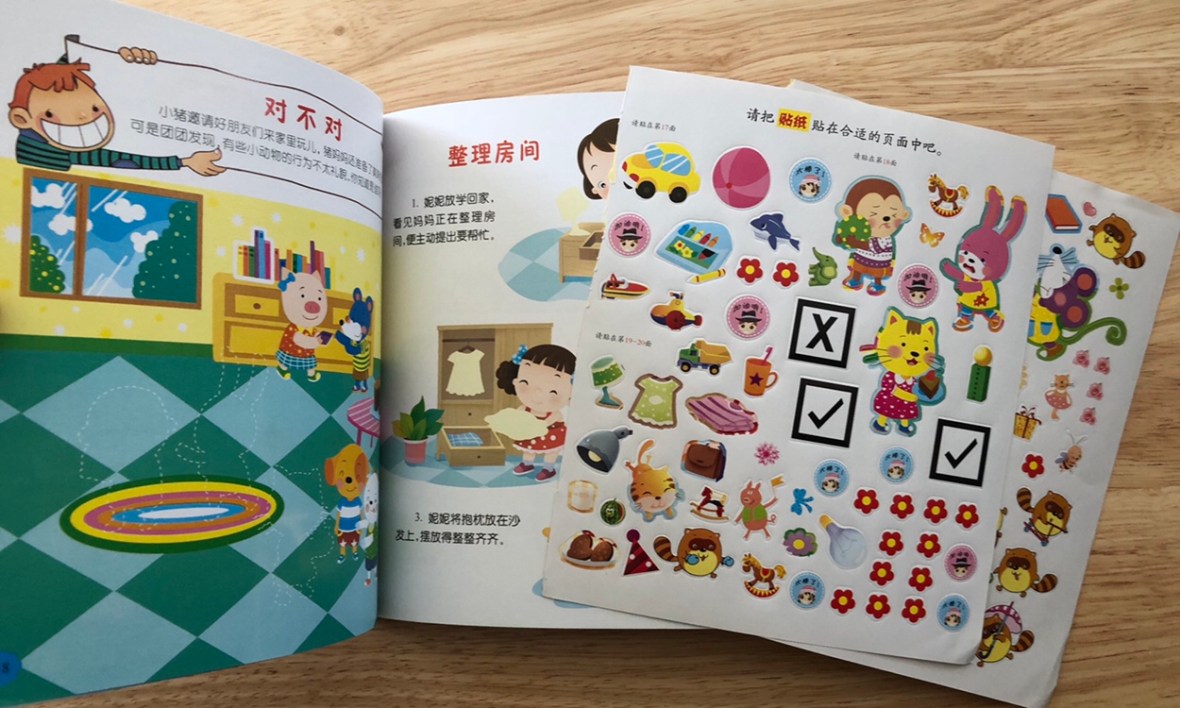
The only thing you need to do is cut the sticker sheets out with a craft knife:

And read them to your child, of course. Personally I much prefer reading than thinking of what to say. Because thinking in Chinese 💭 is TOO MUCH WORK.

Here’s what I like about this particular set.

#1. Cheap

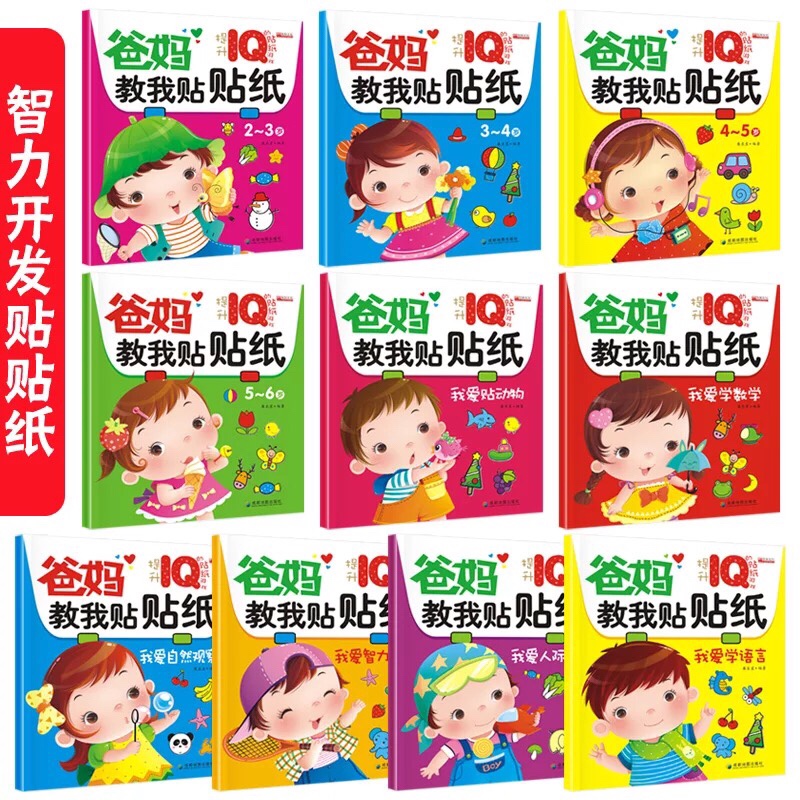
TEN sticker books (24 pages each) cost less than $4 USD! IKR?! I think I paid more for each English sticker book when Little Man was a toddler.

#2. Covers a wide variety of topics and age range

Some books have age ranges on them 2-3 years, 3-4 years, 4-5 years, 5-6 years and others are based on topics like Science, Math, Logic, Language.

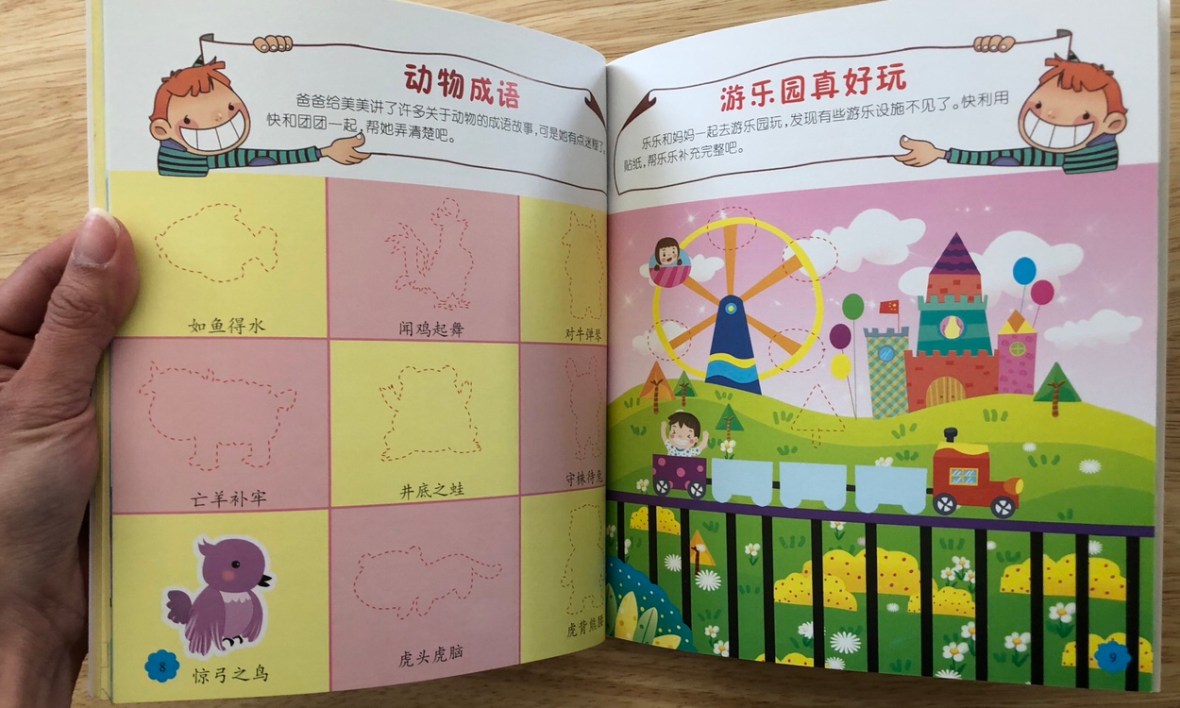
It goes from simple stories and vocabulary (animals, clothing, occupations) to more advanced concepts like food chains, telling time, character recognition and 成语 (idioms).

#3. Vocabulary and comprehension

Overall they are a good fit for Little Man (age 5) and are great for Chinese language bonding time. It helps me realize the gaps in his vocabulary because sometimes he doesn’t understand when I read him the instructions. Actually I don’t know the meanings of half the idioms shown above so it’s educational for me as well. 😛

Dislikes:

The books don’t lay flat because of the binding. Most of the time I have to hold it flat for Little Man while he sticks the stickers on. GAH. Same problem with many English sticker books that I’ve bought from Amazon so it’s not just these ones.

Also I find it hard to believe a 2-year-old would have the fine motor dexterity to manipulate the teensy stickers. Use your parental judgement on that one!

Buy from:

Taobao link here. Like most items I buy from TB, the shipping costs more than the items.

img_1558

Other sticker books I’m eyeing:

{Like and Follow me on Facebook and Instagram!}

Bilingual Journey, Teaching Strategies

Bilingual Journey (7 months in): Successes and Failures

Last June when Little Man was 4 years 9 months old, I was struck by a sudden desire to teach him Chinese. Up until then he was 100% monolingual in English.

In the last seven months I’ve tried (almost) everything to boost his Chinese skills. I thought I’d share what things DID and DIDN’T work for us, because it’s soooo annoying to waste resources on things that have little measurable impact.

FYI, I grew up in Singapore and am bilingual and biliterate in English/Chinese. English is my dominant language and my Chinese is very good but nowhere near native.

Report Card (Age: 5;4, 7 months into learning Chinese):

  • Comprehension: ~48 months
  • Speaking: ~24 months
  • Reading: ~400 characters

A member of a bilingual FB group told me this idiom: 万事起头难 (the beginning is always difficult) and this is the damn truth. Chinese was SO SO SO hard for him at first because he was unaccustomed to the sounds and grammar of the language… but once he learned about 150-200 words, things skyrocketed. He started understanding short sentences, then longer sentences, then whole stories. He gained 48 months of comprehension in 7 months!! So if you’re experiencing difficulty teaching your child Chinese, persevere. 💪🏼 An initial rejection or slow period is completely normal:

learning-a-second-language
Source: k5 ChalkBox

Successes:

These are the things that made a huge impact on his language development as compared to cost. High return on investment (ROI), so to speak.

#1. Speaking to him in Chinese

I am his primary source of language input as we do not regularly get together with other Chinese speakers. In the beginning I often spoke to him in Chinese followed by English, e.g. “把你的鞋子穿上. Put on your shoes”. As his Chinese improved I gradually reduced the English translations and now he is able to understand basic conversational Chinese well.

#2. Home library

Our Chinese home library is probably the costliest expense so far but 100% worth it for the exposure to new, varied, and advanced vocabulary. E.g. last night we read these “Butt Detective” books and encountered a heck ton of vocabulary that he was not familiar with like 案件 (case), 窃贼 (thief), 嫌疑犯 (suspect), 局长 (commissioner).

I’ve also gotten savvier about picking better Chinese books and he is enjoying them more and more.

#3. Music

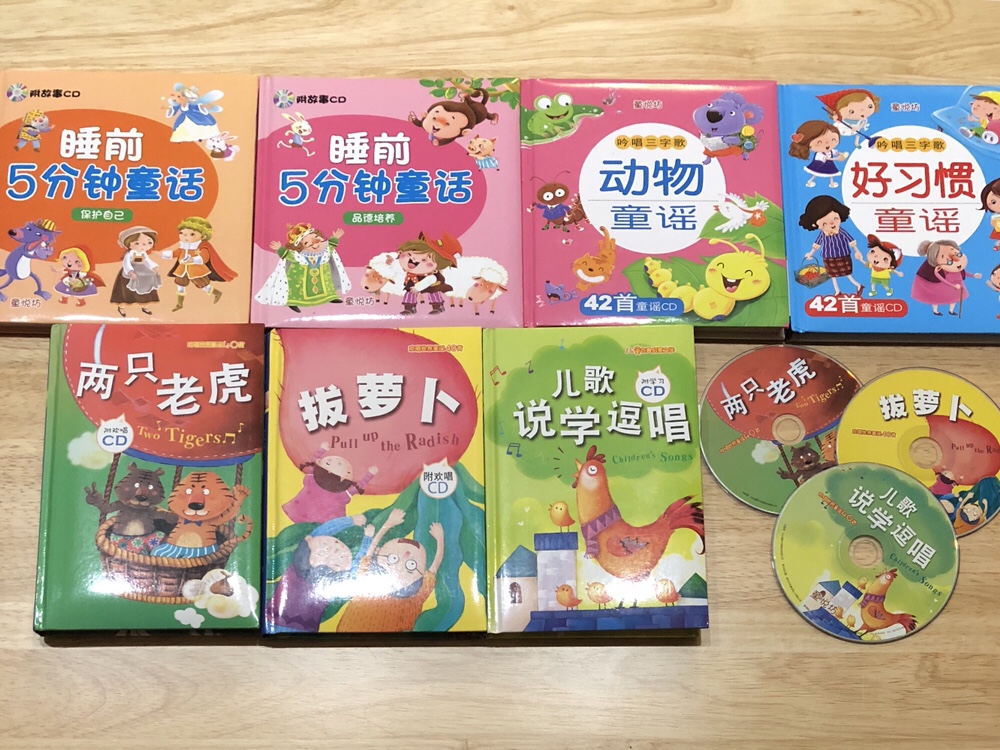
We have a growing collection of CDs/books that we listen in the car every day for 10-20 minutes. On weekends we also listen to Hoop Kids 圈圈 music while doing quiet activities like dot-to-dot and coloring. The longest Chinese sentences that he can speak are lines memorized from songs! Plus it is really cute to hear him singing to himself.

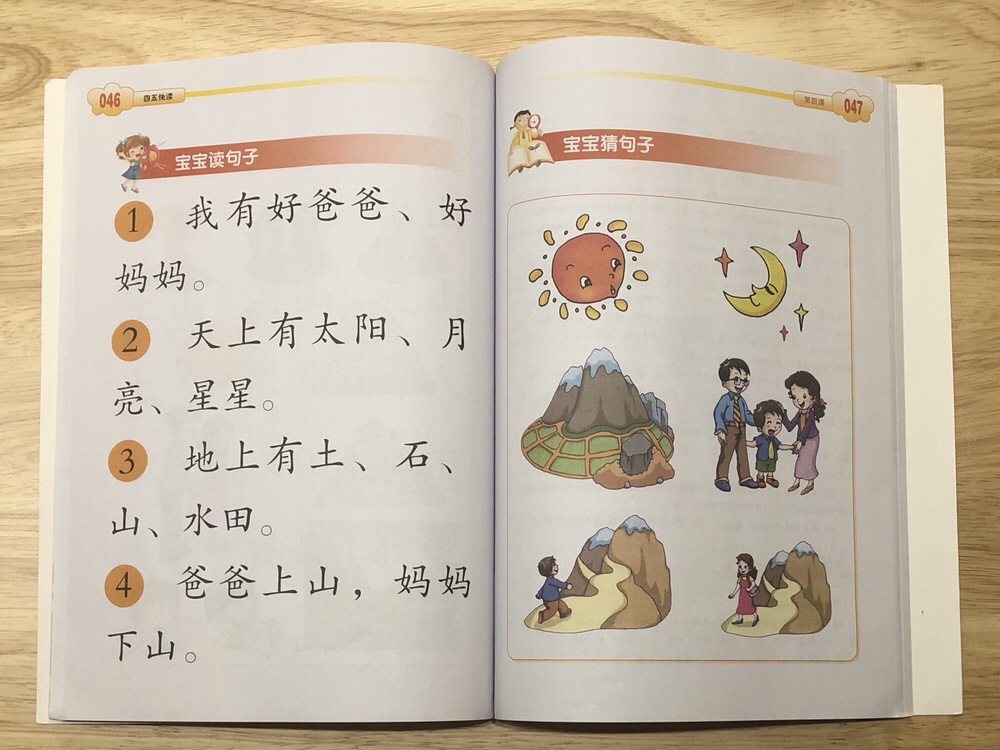
#4. 四五快读 Reading curriculum

I started teaching him to read characters when he was about two months into learning Chinese. At that time he didn’t even know what basic words like 天,田,云 meant. Reading helped him learn language. I attribute this to the fact that he is more of a visual learner than auditory so seeing helps him learn.

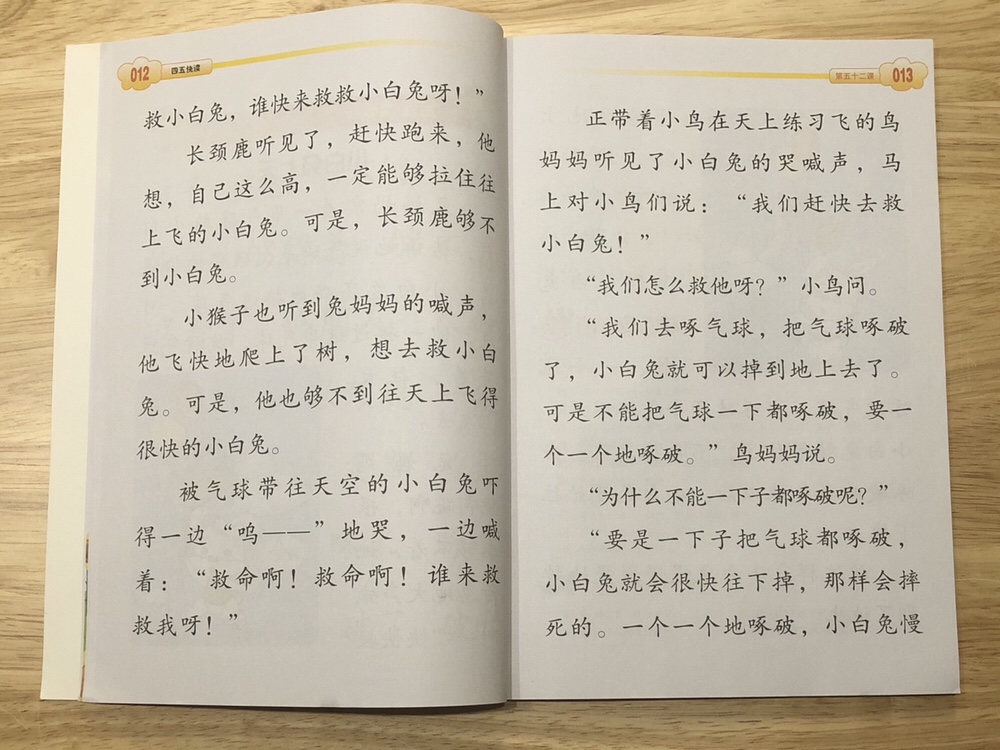
The good thing about 四五快读 is that it starts out with easy words and short sentences in Book 1 and gradually gets longer and harder. This incremental approach has been very helpful and now in Book 6 he is reads and comprehends 4-page stories. 🙂

Easy sentences in Book 1 (Aug 2017)
img_1509
Now reading 4-page stories in Book 6 (Jan 2018)

Note: He was 4.5 y.o. and a fluent English reader when we started 四五快读. If your child is really young like 2 years old I would focus on listening/speaking and not reading.

Failures:

#1. Montessori at home

Honestly, attempts to Montessori at home have been a big flop so far. I cannot wrap my brain around why Little Man does so well at his Montessori preschool that he’s attended for almost 3 years, yet shows zero interest at home.

GAHHHHHHHHHHH!!!!!!
I have made my peace with the fact that while other bloggers have beautiful Montessori set ups at home and their kids LOVE it… it doesn’t work for us. I’ll still prepare activities occasionally but am not doing to spend too much time/money on it. Cutting my losses on this one.

#2. Toys, games, apps, videos, etc. 

These add to the overall FUN/COOL factor but have had minimal impact on his language development. Perhaps they will play a bigger role as he gets older and becomes more proficient in Chinese. I learned quite a bit from watching Chinese shows when I was in elementary-high school but that’s because I already had solid foundation in Chinese, e.g. when you can read 95% of the subtitles then it’s easy to learn the other 5% from TV. But if you can only read say 25% of subtitles you will not be able to learn 75% from watching TV.

Videos, apps and such are good for supplemental learning but they can never be the primary mode of instruction. Has anyone ever learned a foreign language through watching videos?? Doubt it.

img_0603

Goals:

My immediate goal is to get him to age-level comprehension. He is speaking more and more sentences which is very encouraging. We also started some handwriting. I’m also trying to spend less time playing on my phone and more time speaking to him in Chinese! 😛

I’ve also come to the decision that I’m 100% a-okay with him learning Chinese as a second language and therefore will not stress myself out by comparing with others who are learning Chinese as a first language. After all, I myself am first language English, second language Chinese and I turned out fine and proficient in both. What this means is I will not be teaching him Science or Math or other subjects in Chinese. Letting it go. 

{Stay updated by following me on Facebook and Instagram}

Chinese Resources

Chinese Resources: Twinkl Review {GIVEAWAY}

3/7/2018: This giveaway contest has ended.

I came across Twinkl by chance when browsing online for Chinese coloring sheets. They are a UK-based company so most of their resources are in English, but they also have a huge variety of resources in Simplified Chinese and many other languages.

A Twinkl subscription gives you unlimited access to all their high quality printables in every imaginable topic. In my work as a speech pathologist, I help students of all ages across all subjects from Chinese, English, Social Skills, Math, Science, Social Studies, and even PE. Sometimes the kids want to color pictures or do crafts. I can find almost everything I need on Twinkl!


Many of my students with special needs have difficulty writing and cutting worksheets, so I often turn the printables into file folder games which are fun, hands on, and reusable. 🙂

The other thing I like to do is turn printables into Montessori-style cards by adjusting the printer settings to print 6 of them on a page:

image1 (3)

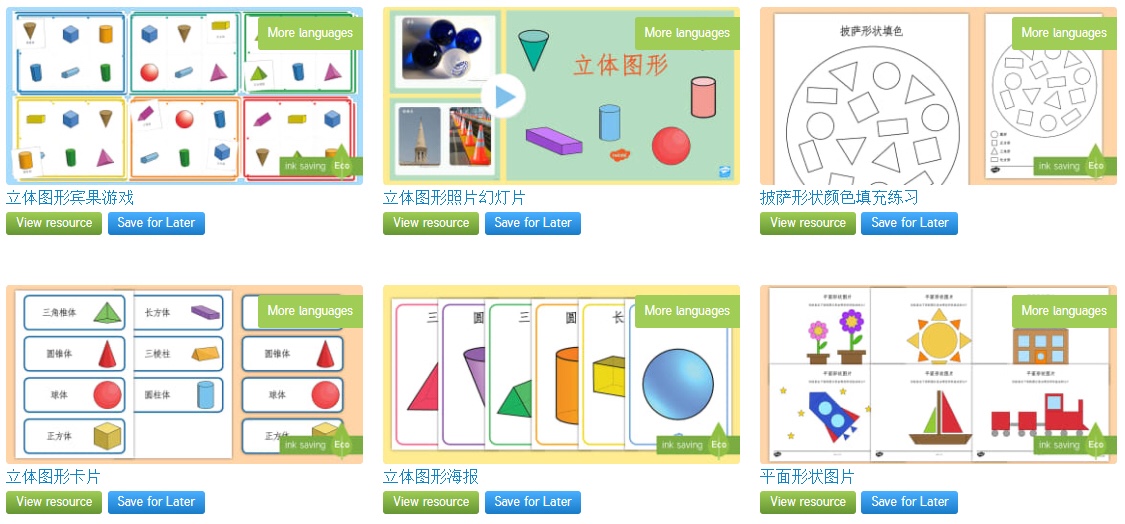
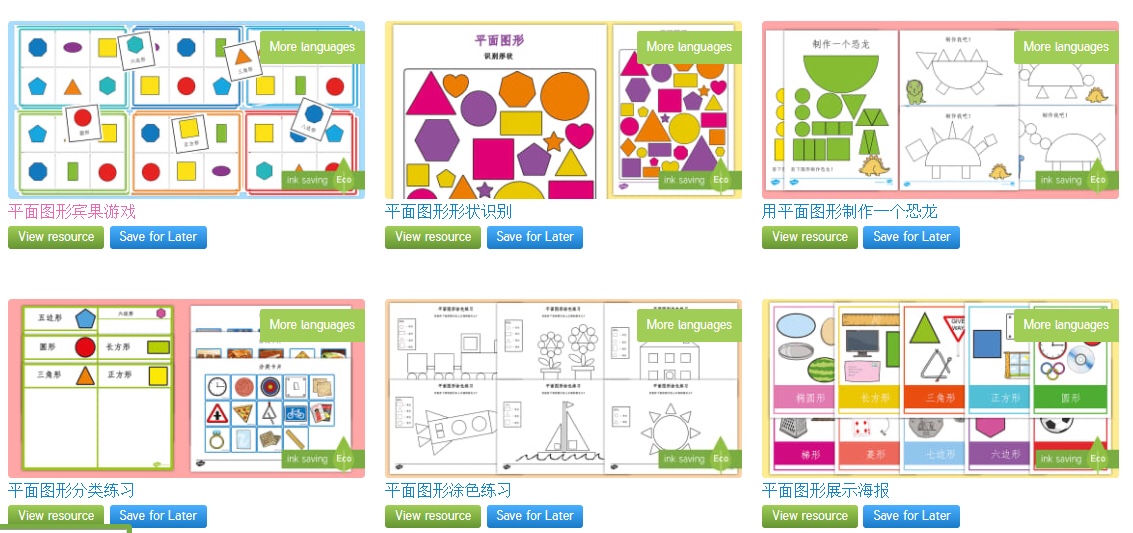
The Twinkl search engine accepts English and Chinese searches, e.g. typing in “形状” yielded a mind-blowing FIFTY-TWO shapes printables in Chinese:

They also have a nice variety of real photos and more cartoon-type illustrations so you can choose what you like based on your preference:

fruit

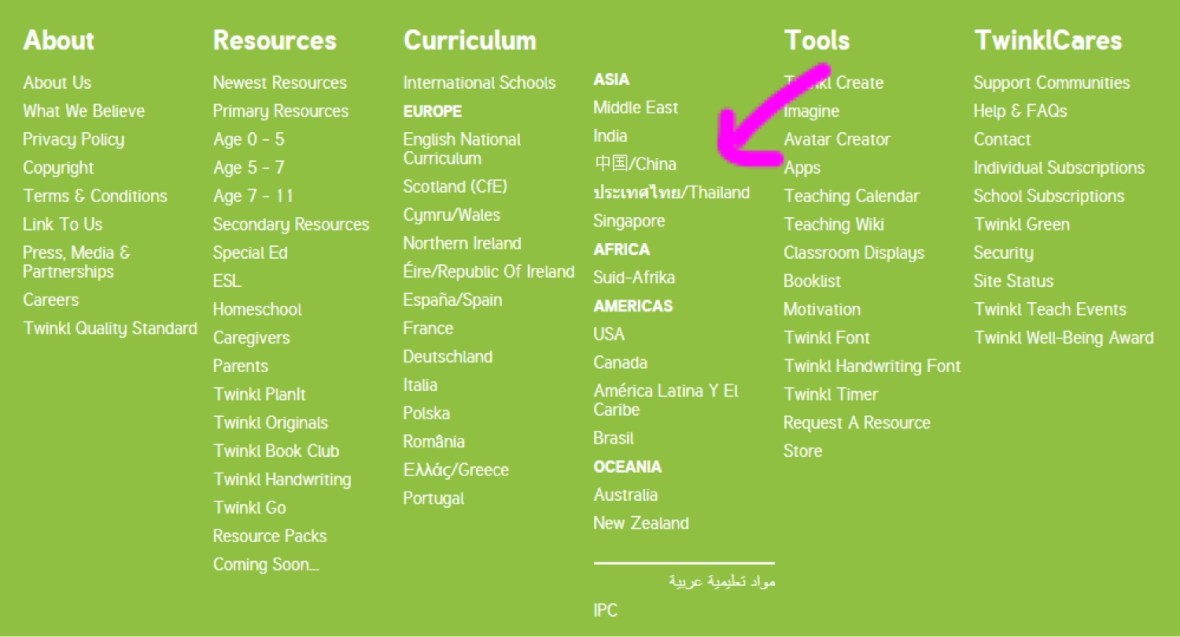
I also like to browse all the Chinese resources available by scrolling to the bottom of the page and clicking “中国 China”. Look at all the different languages available!

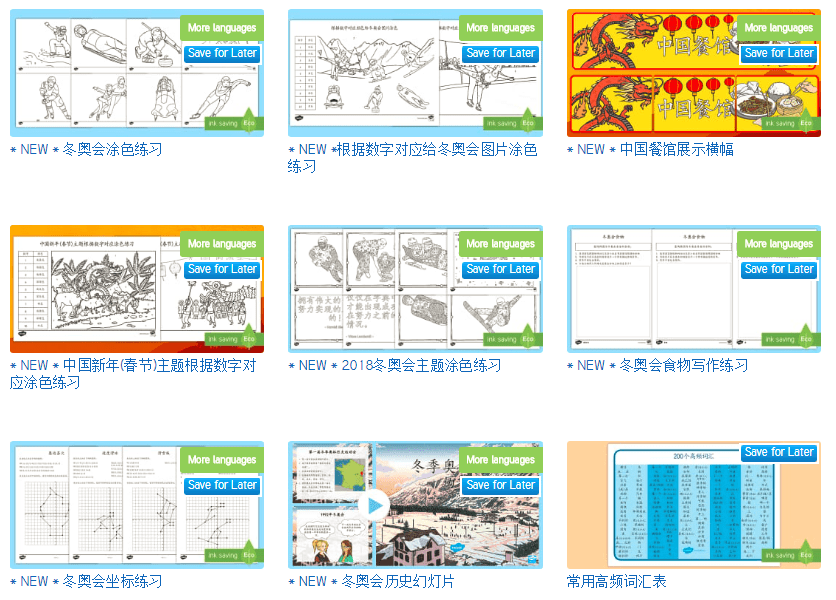
They frequently have new printables based on current holidays or events. Here’s a sampling of the materials for Winter Olympics and Chinese New Year:

winterolympics.PNG

Every time I browse around, I end up finding yet another super cool thing. The other day I randomly discovered Singapore (my homeland) coloring sheets and National Day printables and about fell out of my chair. AMAZING!

How does Twinkl work?

You get unlimited access to all their materials with a flat fee of $6.99 USD per month ($78 annual). They have great customer service and are responsive to emails/feedback in a few days. The printables are often available in a variety of options like English, Chinese/English, Chinese/Pinyin or Chinese only so you can select what you prefer.

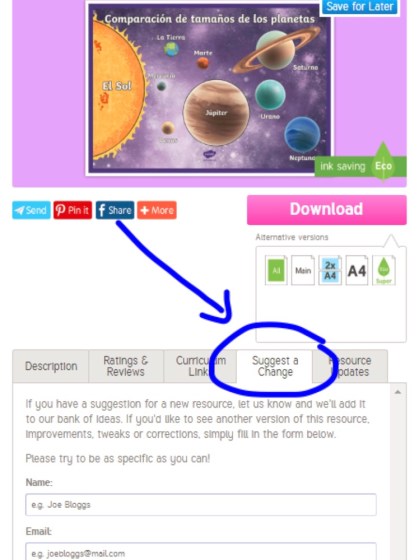
If there is a printable that you like that is not yet available in Chinese, you can contact them to translate it. So far I’ve requested for a handful of printables to be translated and they have been so obliging each time and email me when it’s ready. 😀

img_1266

Downsides:

Twinkl has a huge array of materials for teaching vocabulary, language, and themes and you can find most of the units covered in school like body parts, colors, weather, seasons, holidays, etc. However there is not much for teaching the more technical aspects of Chinese like strokes, radicals, and character writing.

weather.PNG

The other con is that some materials are only available in UK English and when I use them with my American students, I get comments that things are “spelled wrong”. I do not mind this really as it gives me an opportunity to discuss with them that there are variations in English around the world.

Is it worth it?

You’re probably wondering if the subscription fee is worth it and the answer is… it depends on how often you use it. If you use it almost every single day like me, then of course it is 100% worth it for the high quality materials AND time saved AND convenience of downloading what you need immediately.

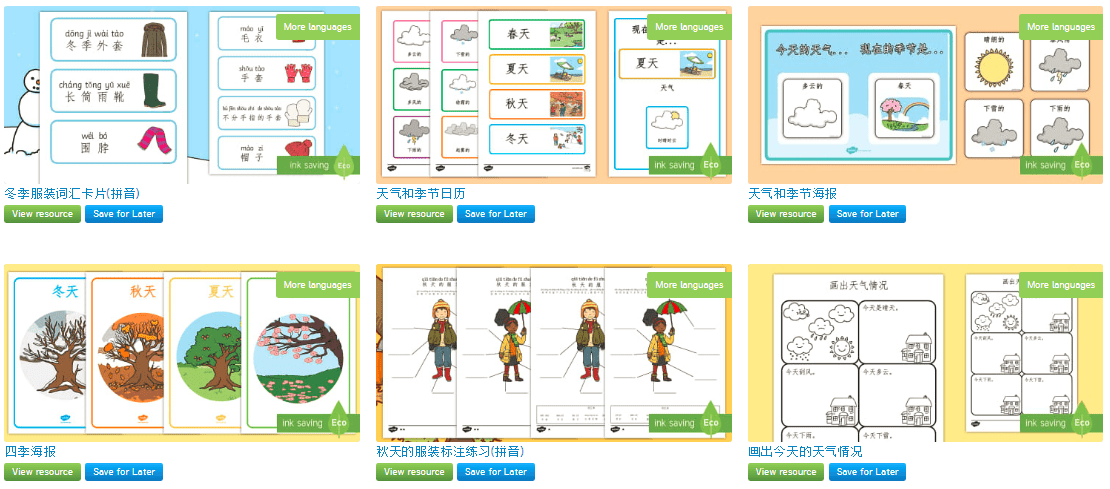
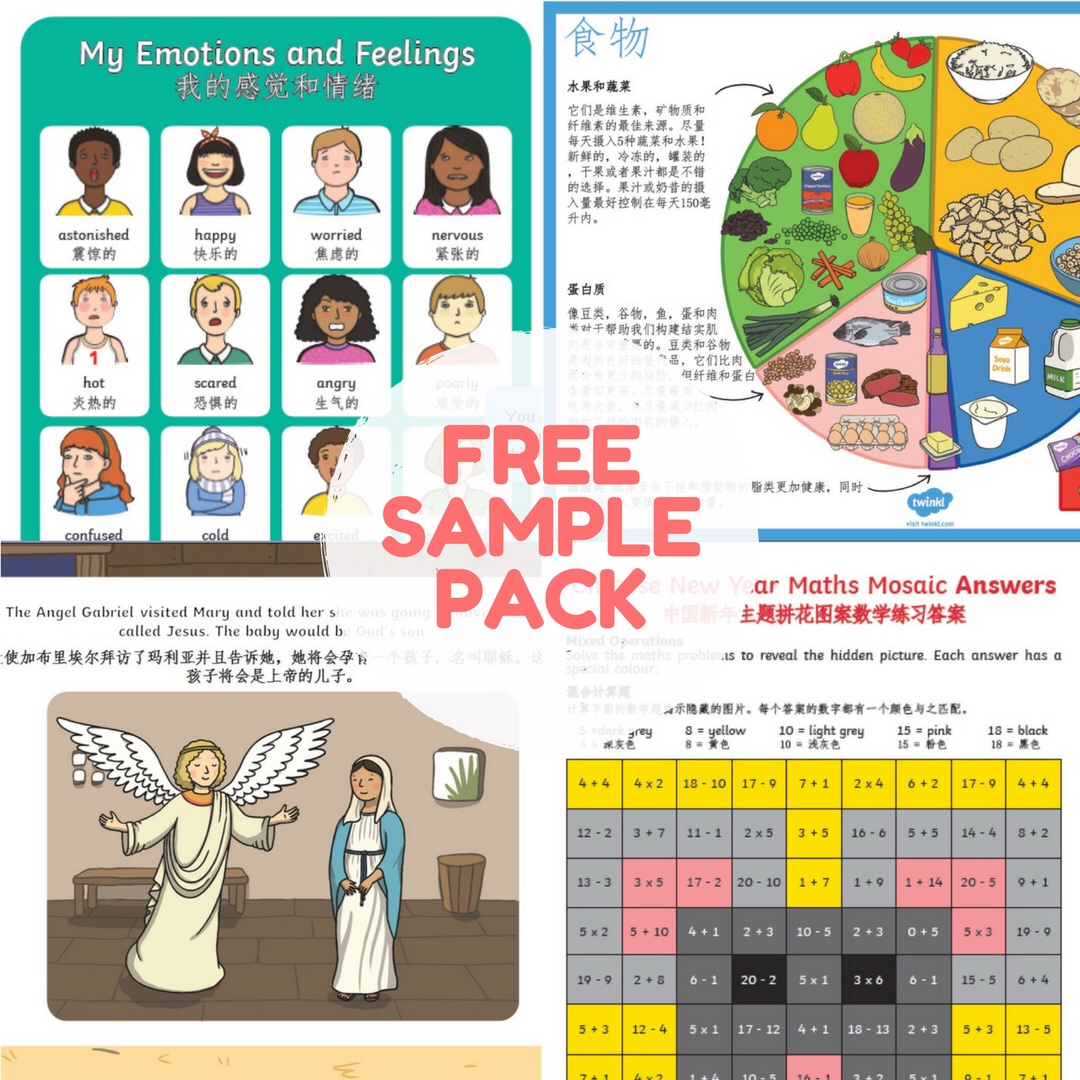
The best way for you to decide is to browse around and try the free Chinese sample pack (link below), which includes the printables shown here and more:

Download the absolutely free Chinese Resource Pack here! You don’t even need to give them your email.

Giveaway Details (This contest has ended)

  • This contest will run from Feb 26, 2018 – Mar 5, 2018, 7pm CST. One winner will be selected at random.
  • The winner will receive a 12-month Core Twinkl Subscription sponsored by Twinkl. Since this is an online subscription, this contest is open to anyone from any country! Click here to read Twinkl Terms & Conditions
  • Each person can have a maximum of three entries, as listed below.
  • The winner will be contacted via Facebook Messenger after the contest ends to claim his/her prize directly from Twinkl.

To enter the contest:

  • Must like and follow both Hands-On Chinese Fun and Twinkl USA Facebook pages.
  • Must comment on this Facebook post with the country you are residing in.
  • (Optional) For an extra entry, share this Facebook post. Remember to set the post to public.
  • (Optional) For an extra entry, follow both @handsonchinesefun and @twinklusa on Instagram and comment on this Instagram post with the country you are residing in.

Share this post with your friends and family!

Chinese Immersion, Preschool Reads

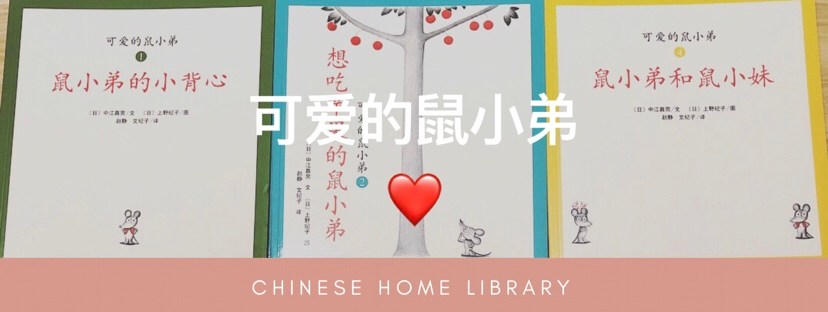
Preschool Reads:《可爱的鼠小弟》Little Mouse Series

This Japanese-translated bestseller was recommended to me by a friend and I bought it not expecting much. I looked at a few sample pages online and it didn’t seem that special…

But, she was right and I was wrong. I LOVE THIS SERIES. ❤️❤️❤️

The first thing I should tell you is that you should buy the entire series (22 books). Or at least buy the first set of 12 books. Each book is a stand-alone story but there are many running gags:

E.g.

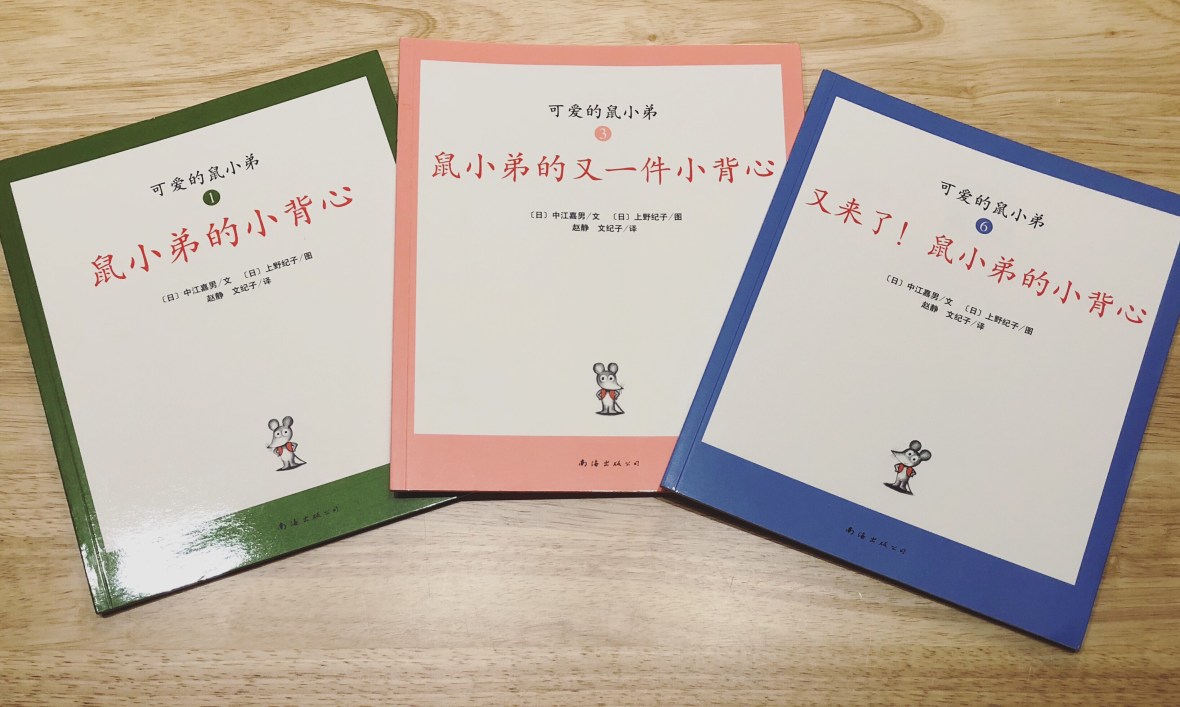
Book 1: 鼠小弟的小背心 Little Mouse’s Vest

Book 3: 鼠小弟的又一件小背心 Little Mouse’s Other Vest

Book 6: 又来了!鼠小弟的小背心 Little Mouse’s Vest Again!

The stories just keep getting funnier and funnier because you know the backstory of Little Mouse’s vest. It may not make as much sense if you don’t read the books in order.

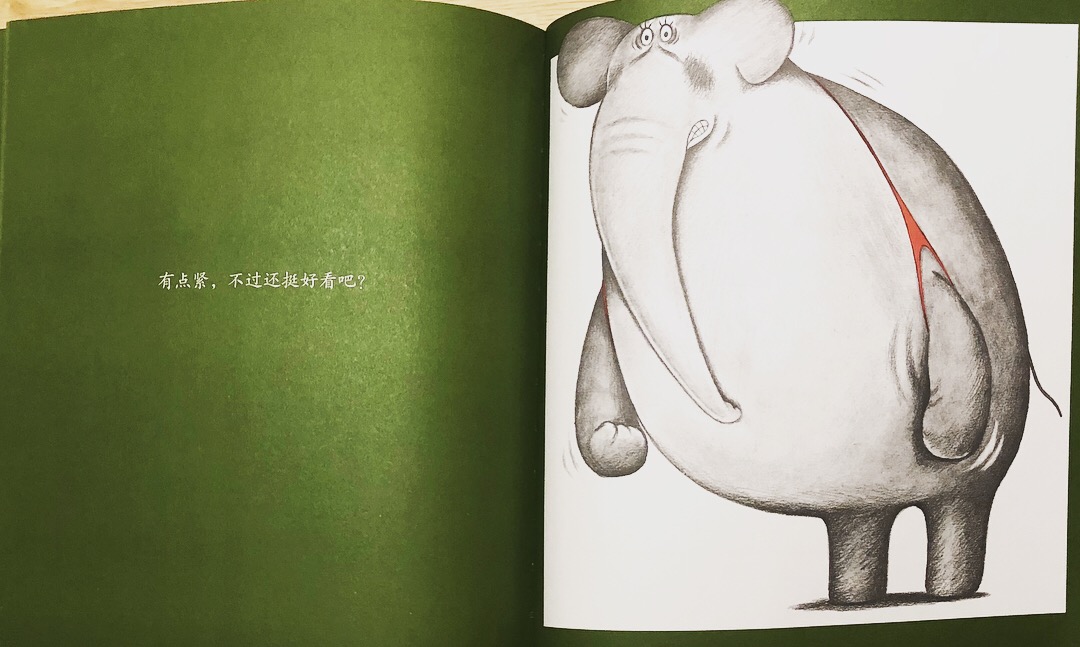
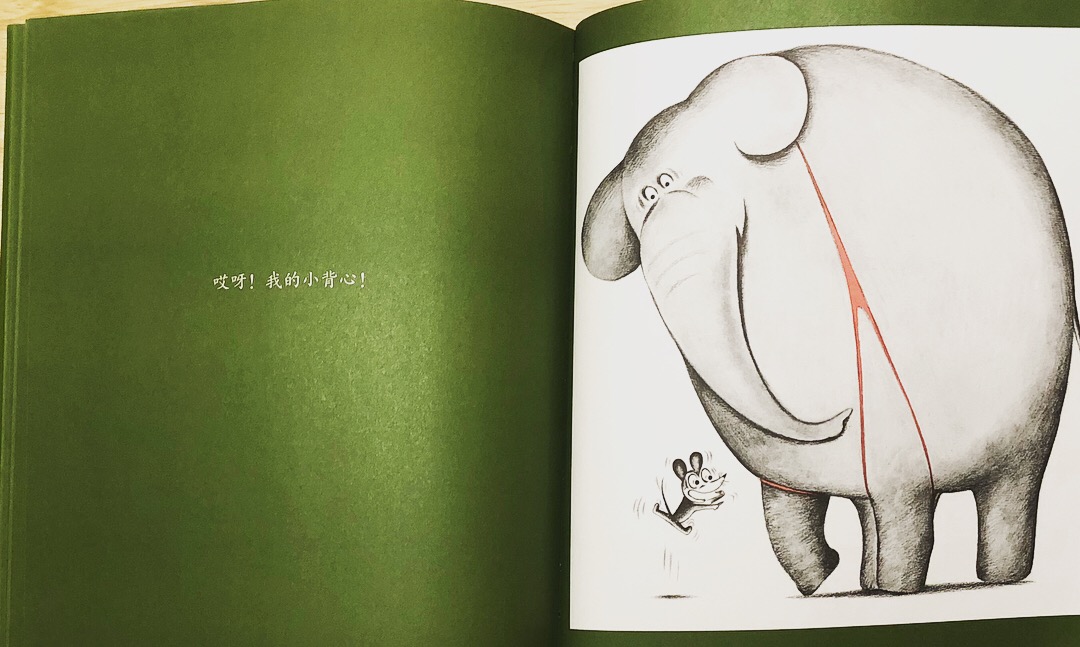
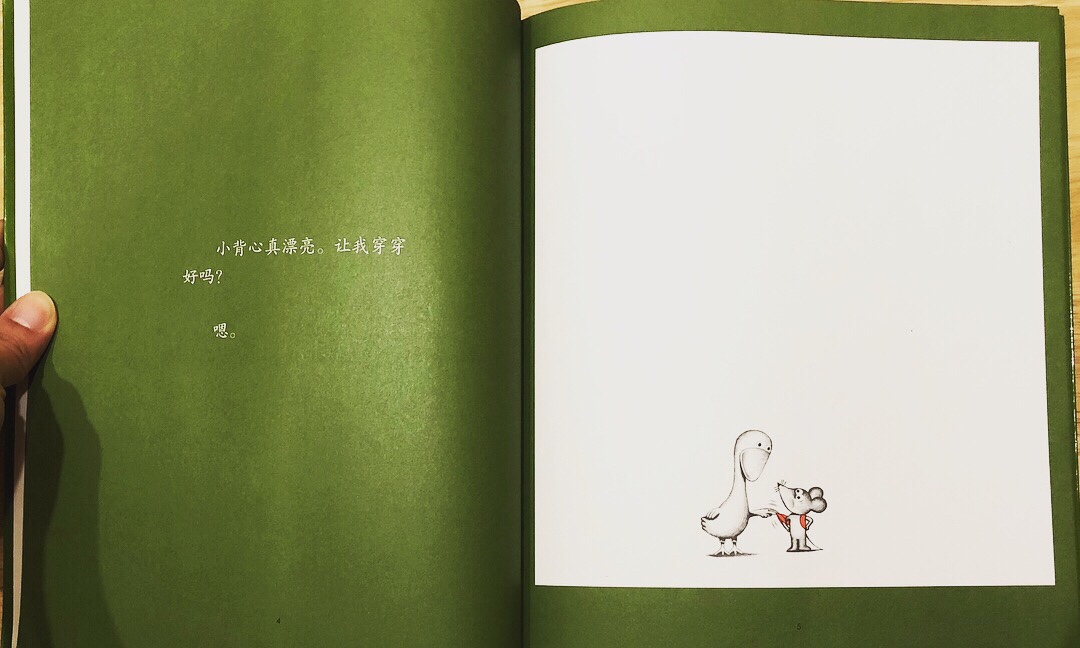
The illustrations are soooooo cute and there’s a hilarious twist on the last page of each book. This series reminds me very much of Mo Willem’s Elephant & Piggie series in terms of style and content.

The other thing I really like about Little Mouse is the vocabulary/Chinese characters are easy and repetitive. Little Man knows about 400 Chinese characters and can read most of the sentences. I think that this will be a great set for him to practice reading to gain confidence and fluency.

image2 (1)image1 (1)

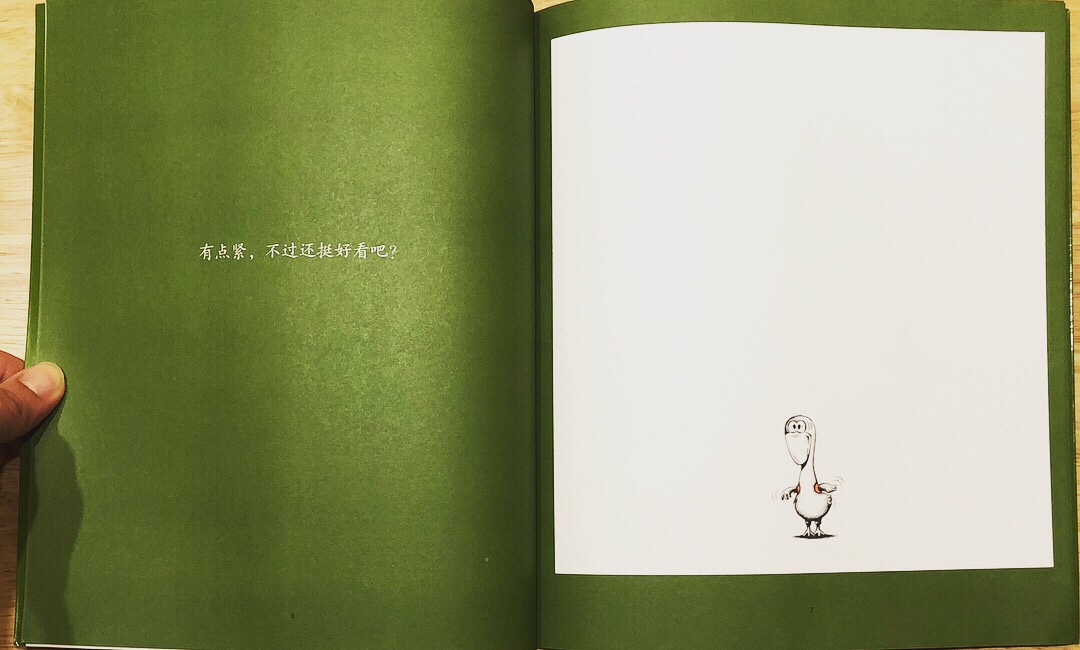
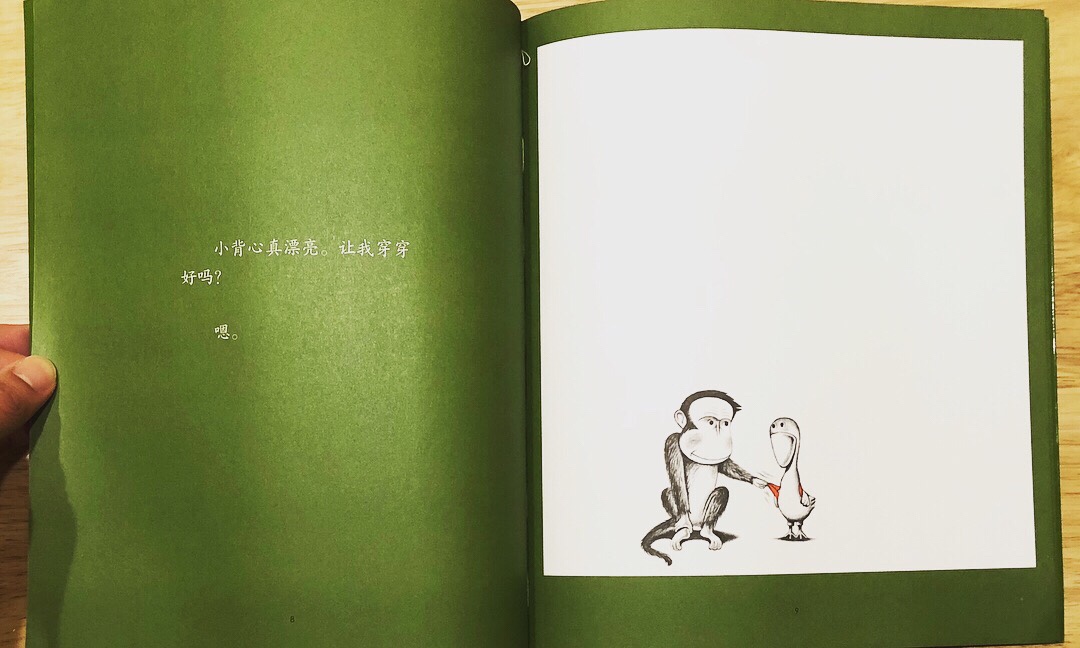
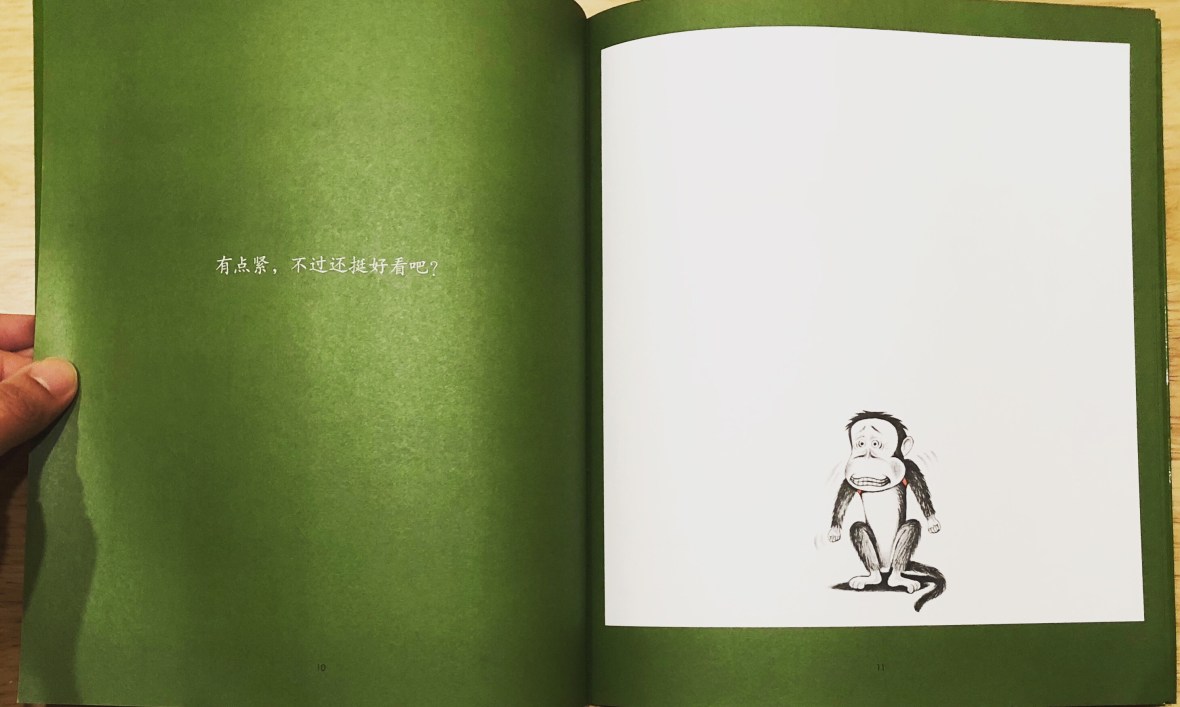
As you can see in the sample pages above, the lines are repetitive for most of the book “小背心真漂亮,让我穿穿好吗?” and “有点紧,不过挺好看的吧?”. This makes it really easy to understand and read, ideal for beginning Chinese learners and readers!

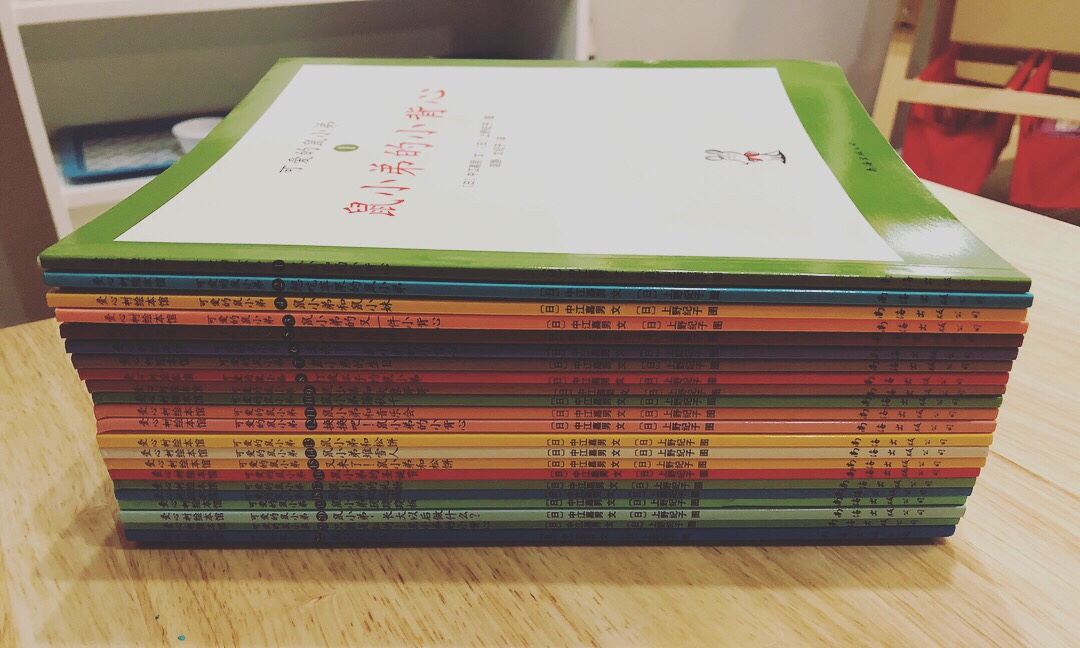
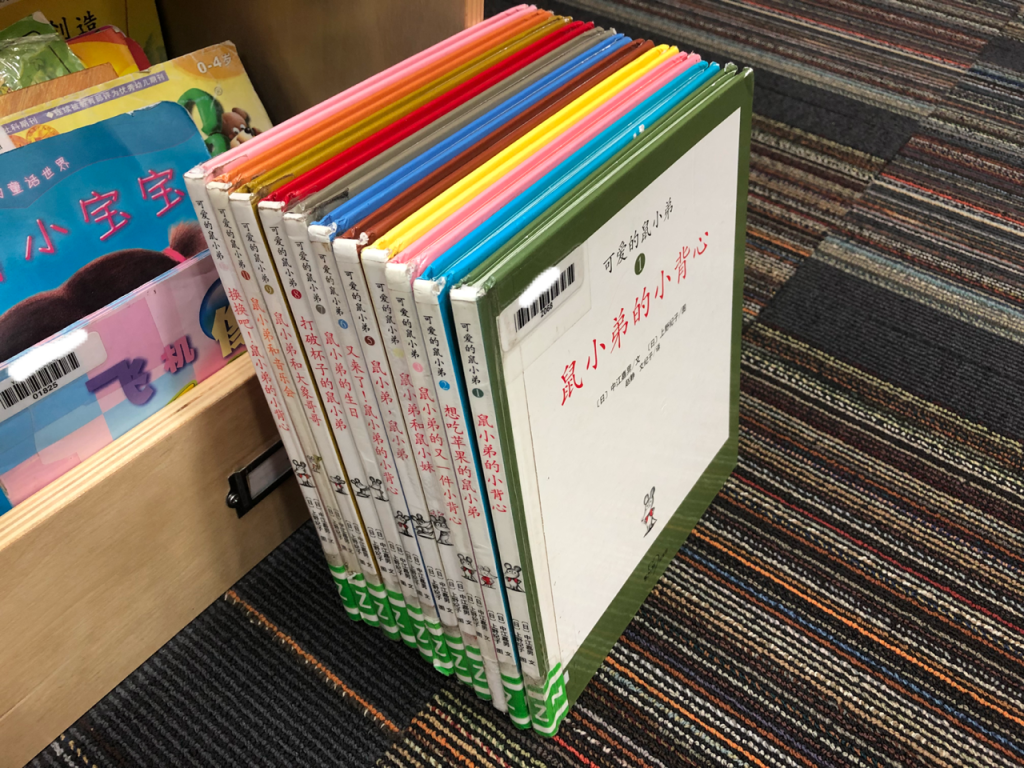
This series is very popular and you may be able to find it at a local Chinese library if you have one. I found eleven of them at my immersion school library:

IMG_1180

Buy from: I purchased set of 22 paperbacks from Taobao (China based) for $30. See How to Buy Books from Taobao

Also available on China Sprout (U.S. based).

{Follow me @handsonchinesefun on Facebook and Instagram for more book recommendations}

Chinese Immersion, Teaching Strategies

Immersion Parent Guide to Supporting Chinese

I used to think that the immersion parent’s job was to strengthen the home language, usually English. I’ve since come to realize that the immersion parent has the double job of strengthening both English AND Chinese. IKR?! 😛

There are powerful ways that you can support your child’s language development even if you don’t speak a word of Chinese!

Disclaimer: The following information comes from my experience working at an award-winning Chinese immersion school for five years and German immersion school for one year. Ideas and opinions are my own and not representative of any school I previously or currently work at. 

7 Top Strategies:

#1. Teach your child to read in his first language

I put this first because it’s probably the most overlooked strategy. Reading is a transferable skill, even if it’s between two completely different languages like English and Chinese. A child that can read fluently in his first language will have attention, stamina, understanding of how phonics and reading works… these will help him read in Chinese!

Reading in English enabled my son to read pinyin easily and he used that to learn characters.

img_6383
Reading in the first language boosts reading in the second language

If you’re looking for a good English reading program, I recommend The Reading Lesson: Teach Your Child to Read in 20 Lessons.

#2. Become BFF with your child’s teachers

This is hard for me to do as an introverted person, but really reaps huge benefits. When you get to know the teachers, they will share all kinds of unbelievably useful information and resources with you.

Obviously, don’t be a pest or parasite. I maintain mutually beneficial relationships by helping teachers with small tasks and they in turn help me with Chinese stuff. Win win. 🙂

#3. Hire a tutor

Assuming a 6-hour school day and 28 kids per class, your child only gets about 12 minutes of speaking per day! If you can afford it, hire a tutor to increase the amount of individualized attention for your child.

I suggest not doing academic activities like worksheets because your child already does enough of this during school hours. Instead ask your tutor to engage in interactive reading (video example below) to discuss storybooks with your child, which is FUN and will improve language and literacy.

Many immersion teachers tutor after school. They can also help you choose and borrow Chinese books from the school library, thereby eliminating the need for you to source down Chinese books yourself. 🙂

#4. Understand Chinese language

Without prior background, the chances of you mastering Chinese language as an adult learner are… slim (sorry). Instead of trying to learn Chinese, set a goal to learn about it like what are radicals, tones, pinyin, strokes, etc. so that when your child’s teacher talks to you, you will understand what he/she is saying. (And if you still don’t know what they’re talking about, write it down to Google later)

View this PPT by Kexian Qu, Professor of Chinese Literature and Culture, A Brief Introduction to the Chinese Language

#5. Extracurriculars

Your school and community probably offer extracurricular activities like Chinese calligraphy, art, orchestra, dance, etc. Find out which ones are taught by native Chinese speakers and sign up for them. Some teachers may not have websites or advertise online so you will only find out about them through word of mouth, which goes back to #2 above.

img_1106
Photo from CAAM/CDT

There may be opportunities to host an exchange student from China. DO IT (free language learning for your child!).

#6. Book/CD sets

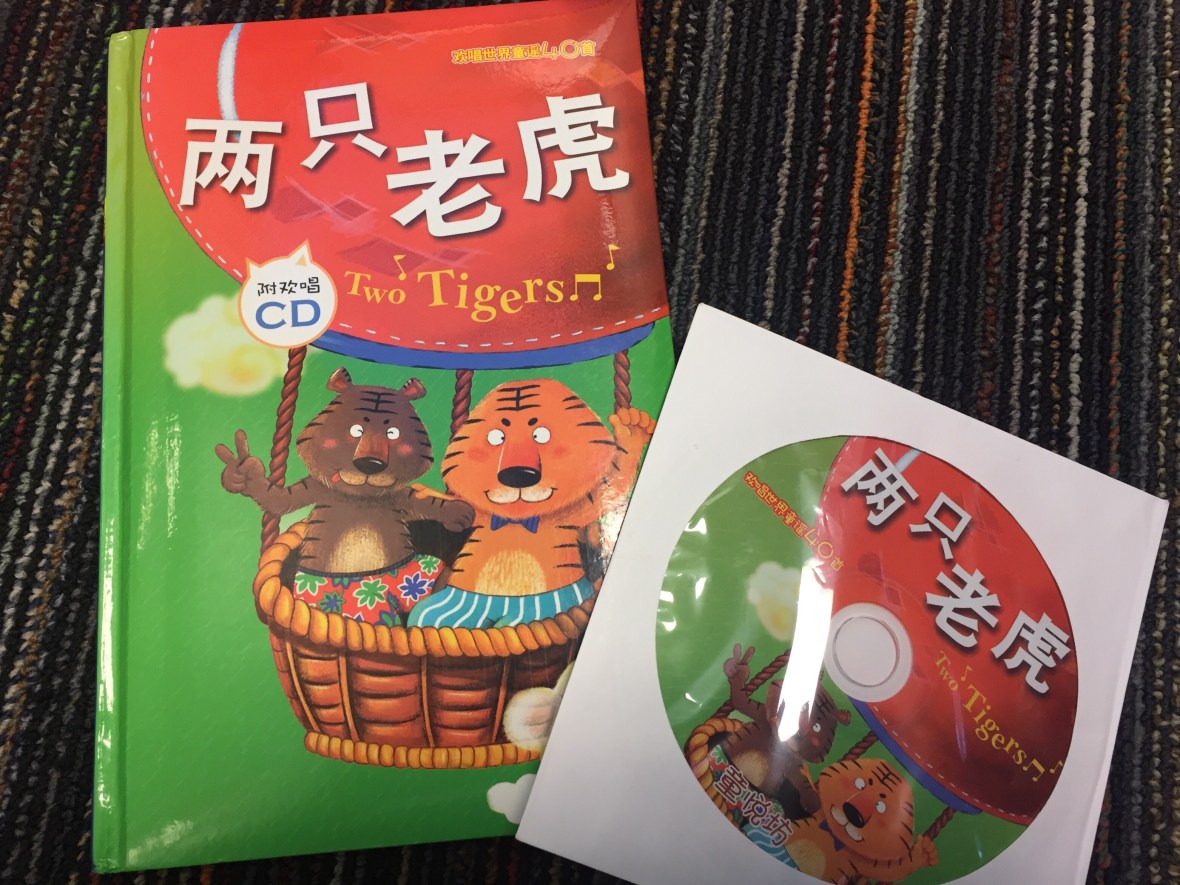
If you’re not able to read to your child yourself, then book/CD sets are your best friend. These are preferable to just CDs as beginning Chinese learners (K-1st grade) NEED pictures to help them understand.

Here are some options from AsianParent.com:

Options from China Sprout:

F829CC34-2353-47BB-99C1-C820F8F6F535

As your child gets more proficient (2nd grade and up), you can transition to more challenging audiobooks of chapter books, many of which can be found online for free. I would suggest that you get copies of the books too so your child can attempt to read them after listening to them.

#6. Print environment

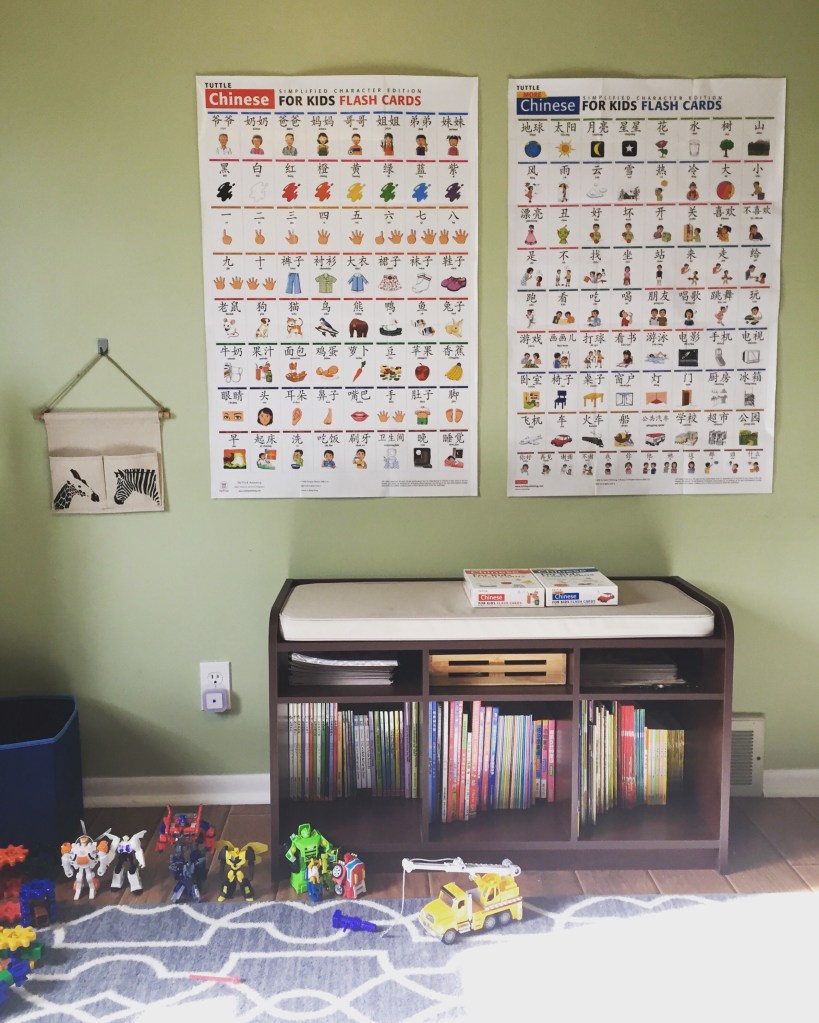
Increase the Chinese print environment in your home with books, posters, games, movies and TV shows on Netflix and YouTube. Always turn on the subtitles when watching Netflix so your child can absorb the print (I learned a lot of characters from reading subtitles).

The more print you have available, the more your child will learn without you even teaching him. Seriously, kids are crazy observant and my students are always pointing out things on the wall that they see and know.

img_0206
Love these Tuttle Chinese flash cards and posters

#7. Always speak positively about Chinese

Even in Singapore (where 80% of the population is Chinese!), people often make disparaging remarks about China and Mainland Chinese people. Or they bemoan how difficult Chinese is. These types of comments will 100% derail your child’s learning! I avoided speaking Chinese for most of my growing up years because I associated it with being uncool.

Do whatever you can to make Chinese fun and desirable and COOL. Often what hinders kids is not the lack of ability to speak Chinese, but the lack of motivation to.

IMG_9418
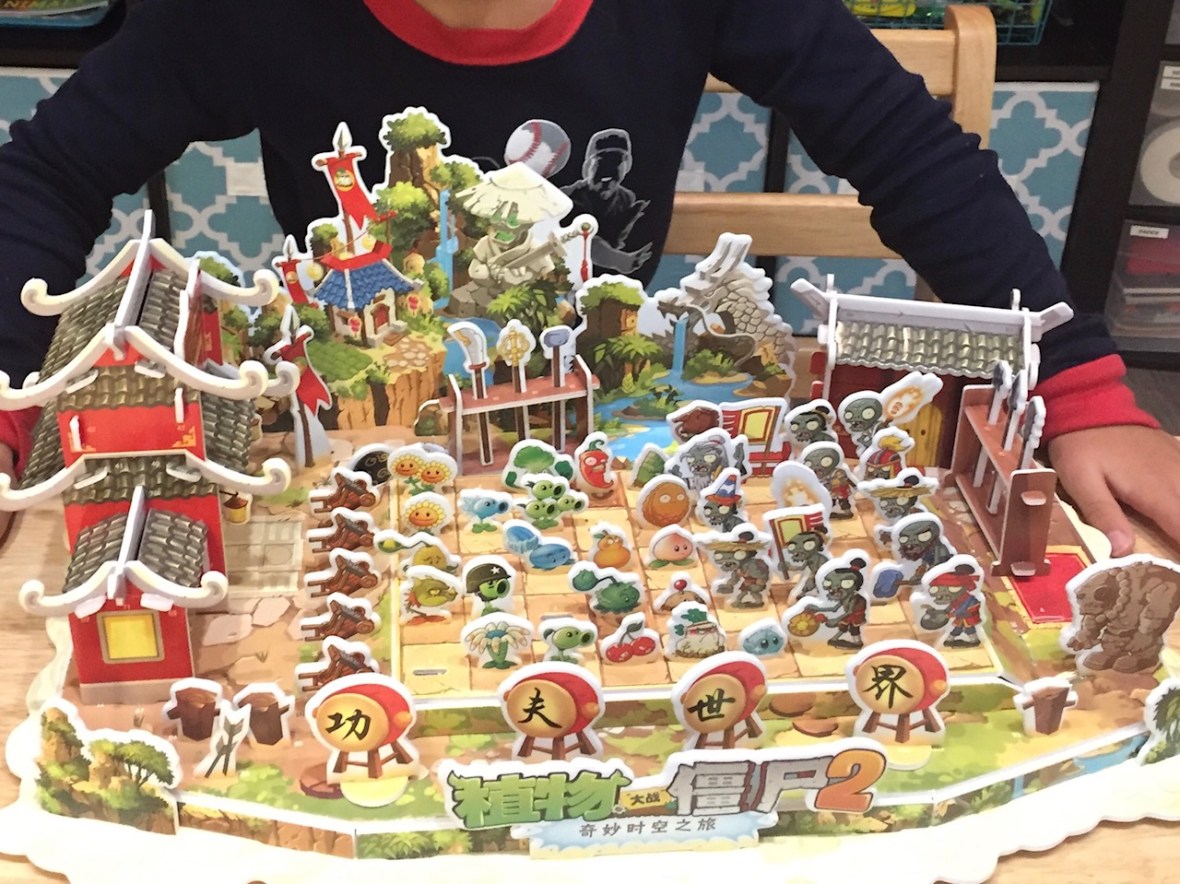
Little Man’s favorite Plants vs. Zombies in Chinese

A final note of encouragement…

The gift of being bilingual will benefit your child for his entire life. The journey is not easy but the results are so worth it.

Share this article with your friends if you found it helpful!

{Follow me on Facebook and Instagram for more Chinese learning tips}

Learning to Read, Teaching Strategies

Busy Parent Guide to Teaching Chinese

During our trip back to Singapore a few weeks ago, I got to catch up with some of my good friends who confessed that they have NO TIME to make crafts. And my blog makes them feel stressed and guilty for not doing enough with their kids.

!!!!! Obviously it’s not my intention to make anyone feel that way. 😬 So, this post is for all you busy parents out there who have no time. Which is basically every parent.
Best kept secret…

YOU DON’T NEED CUTE ACTIVITIES

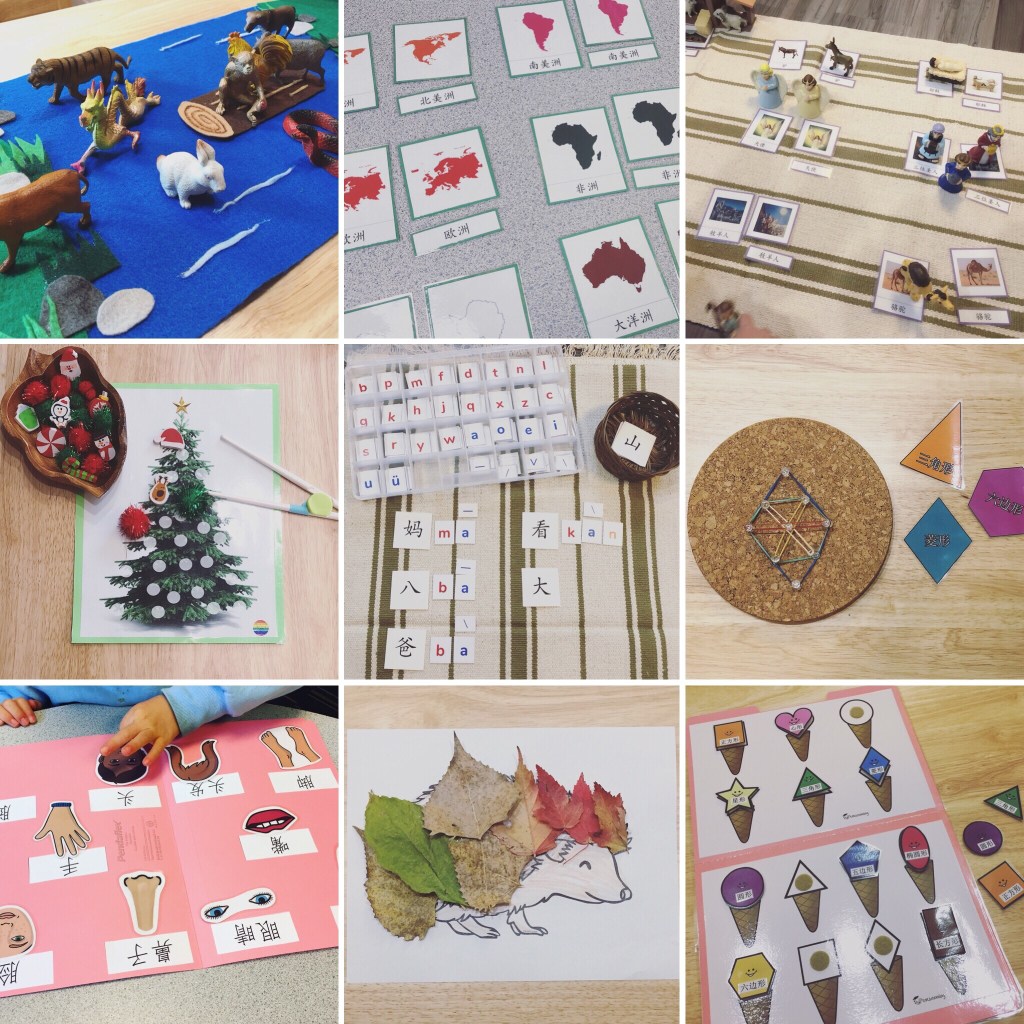
Kids don’t need beautifully handcrafted activities or expensive wooden Montessori materials to learn colors, shapes, or anything else. Look at all these lovely activities I spent hours making…

cccdab2b-412c-4d9d-aa6a-24f01309c7d1

All completely unnecessary.

Kids learn just by having someone telling them “this is red”, “this is blue”, “your cracker is a square”, “that’s a ladybug”. So don’t even feel bad for not preparing activities. Remember that children have learned to speak, read and write for hundreds of years without Pinterest!

(If you’re wondering why I make activities despite the minimal impact on my son’s learning, it’s because I enjoy it. Making stuff and crafting and blogging is my hobby.)

PRIORITIZE

So what DO kids need to learn Chinese? It comes down to just 3 things. Anything else is just extra and for fun.

#1. Language exposure

In the book Maximize Your Child’s Bilingual Ability (excellent read by the way), the author’s research showed that 25 hours per week of exposure is necessary for language proficiency. You must make sure your child is getting the minimum 25 hours of input from either a parent, nanny, immersion school, classes or some other way.

For me as a full-time working parent, this means speaking to my kid in Chinese for 2 hours every weekday and 8 hours per day on weekends. And listening to music as much as possible, like in the car on the way home from daycare.

img_9140
Listen to music or audiobooks as much as you can

#2. Read Chinese books

If you’ve watched TV shows like 《爸爸去哪儿》and 《爸爸回来了》, you’ll notice that native Chinese parents speak to their kids with extremely advanced vocabulary, grammar, and 成语 (idioms) in almost every sentence. 😱

Since I am incapable of speaking a high level of Chinese like that, the only source of advanced vocabulary for my son is through reading books. We read 2-3 Chinese books (and a few English books) every night before bed. I’d like to read more but that’s all Fidgety Boy can handle.

image1
READ READ READ

#3. Teach your child to read

I spend 15 minutes doing this every single day, including weekends, holidays, his birthday, when I’m sick, and when we go out of town. This is my #1 priority.

A child that can read fluently can independently learn and do so many things. I see this with my son in English — he basically just learns by himself through reading books, road signs, and everything around him.

Invest your time in teaching your child to read well.

img_1013
Daily practice with 四五快读

In summary…

Don’t stress about the unimportant things and just focus your attention on the most crucial things.

#1 and #2 are just part of daily life and don’t take up much additional time. #3 does take commitment but if you value it I bet you can find time for it.

加油!💪🏼

About Me: I am a speech-language pathologist and have taught PreK-12th grade language and reading for almost 10 years, including 5 years at a Chinese immersion school in midwestern USA. 

{Follow me on Facebook and Instagram to stay updated}

Home Library, Learning to Read, Preschool Reads

Chinese Home Library Part V: Finale

This morning Little Man completely out of the blue said “I really like my library mom, thanks for my library.” AWWW. 😊 Allow me to bask in this moment because just a few months ago he flat out refused to read any Chinese books!

Here’s how I organized the ~350 Chinese books and ~150 English books we currently have. We have far fewer English books since there are five awesome all-English libraries within 15 mins of our house.

We used to have just one 3-cube bookcase in his bedroom, mixed English and Chinese books, and completely overflowing. This was a really terrible set up because most of the Chinese books are paperbacks with very thin spines, meaning my son pulled everything off the shelf onto the floor to look for what he wanted. URGHHH!!! Also many books were overlooked because he just didn’t see them.

In our new organization system (that I just put in place yesterday!), the 3-cube bookcase is now entirely for English books in one corner of his room. He also got a nice comfy beanbag chair for Christmas which he loves.

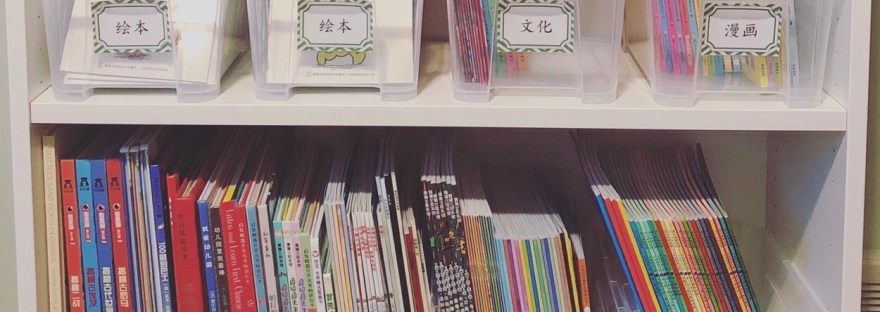
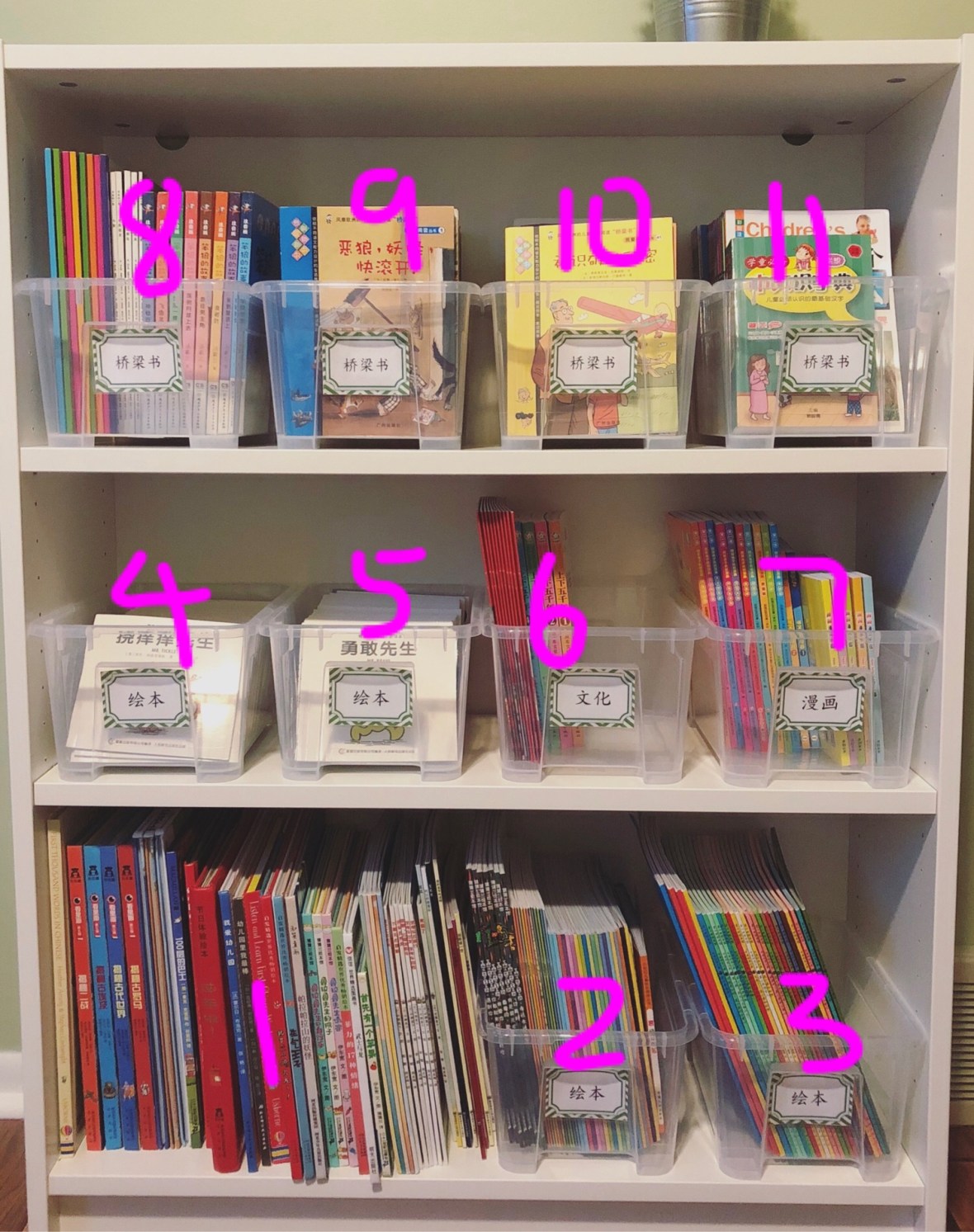
On the other side of his room, I bought an Ikea Billy bookcase and 12 Samla bins for Chinese books. I have it set up like a typical USA classroom library, which is books organized by genre and level, and forward facing as much as possible so that it grabs the child’s attention. Now he can browse books by bin without pulling them all into a giant pile on the floor. WIN.

The bottom two shelves are 绘本 picture books (designed for adults to read to kids) and the top shelf are 桥梁书 readers (designed for kids to read to themselves). I got a 3-shelf bookcase because it’s the perfect height for him at 5 years old. Ideally I would love the picture books in bins facing out too, but… space constraints.

The picture books are generally arranged by height from tallest to shortest. My OCD self really wishes all books were the same size so they can look perfect, but alas. For the readers on the top shelf, they are sort of arranged by reading level from left to right, with Bin 8 being the easiest and Bin 11 the hardest. I think Bin 6 looks a little pathetic being half empty so I am looking to buy some more books to fill it up. 😛

A few people asked me for book recommendations so I’ve listed the books with the following rating scale.

  • R = Recommended
  • Ok = Books that are not the greatest but my kid has somewhat enjoyed and learned something from them
  • TBD = To be determined because we haven’t read them yet. HAHA.

Note: 95% of my books were purchased online from Taobao but I am not able to give you direct links to them as TB sellers sell out of items fast. Also the prices fluctuate quite a bit so search around for the best price. If you are interested in the books, please copy and paste the title in Chinese and enter it into TB search. Alternatively, you can also copy the image and do an image search.

Picture Books:


100层的巴士 The Hundred Decker Bus (R)

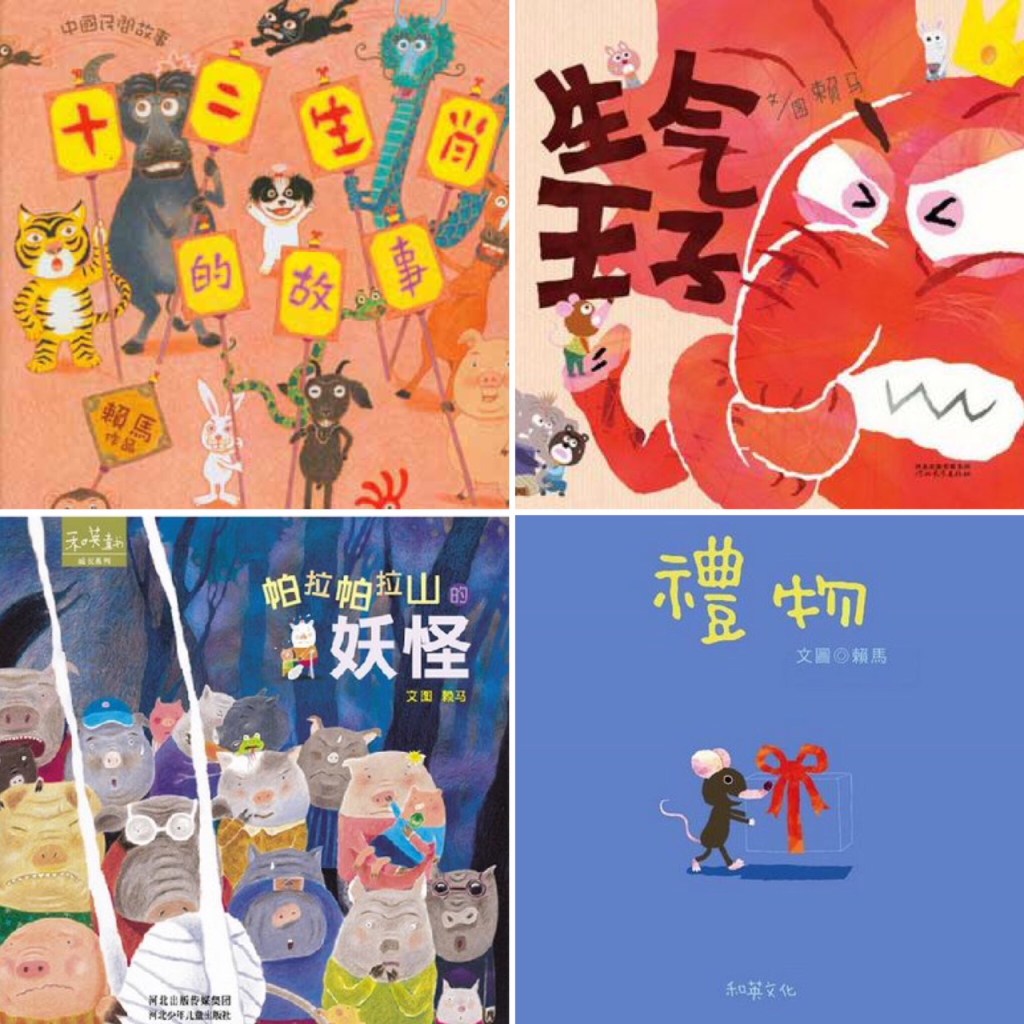
生气王子 The Angry Prince (R)

我变成一只喷火龙了 I Turned Into a Fire-Breathing Dragon (Ok)

帕拉帕拉山的妖怪 The Monster of Papa Pala Mountain (Ok)

过年啦 Chinese New Year (R)

首先由一个苹果 First There Was An Apple (R)

开车出发系列 Tram series (Ok) – Better suited for 2+

100层的房子系列 100 Story House series (Ok) – Better suited for 3+

Bin 2:


你看起来好像很好吃系列 Tyrannosaurus series (R)

青蛙弗洛格系列 Frog series (Ok)

小猪佩琦系列 Peppa Pig series (Ok)

Bin 3:


屁屁侦探系列 Butt Detective series (R)

可爱的鼠小弟系列 Little Mouse series (R)

Bin 4 and Bin 5: 

image7

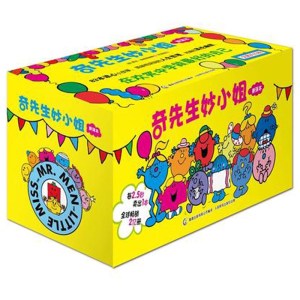
奇先生妙小姐系列 Mr. Men and Little Miss series (Ok) – Print quality is disappointing

Bin 6:


中国传统节日绘本系列 Chinese Holidays series (R)

上下五千年系列 5000 Year Chinese History series (TBD)

Bin 7:


爆笑虫子漫画系列 Larva comics series (Ok)

植物大战僵尸漫画 Plants vs. Zombies series (Ok)

闹闹漫画乐园系列 Nao Nao comics series (Ok)

Bin 8:

我会读系列 I Can Read series (R)

亲爱的小熊系列 Little Bear series (Ok)

笨狼的故事系列 Stupid Wolf series (Ok)

Bin 9:

青蛙和蟾蜍系列 Frog and Toad series (Ok)

我爱阅读 蓝色系列 I Love Reading Blue series (Ok) – Some people like this but I don’t. I ended up selling them.

Bin 10:

我爱阅读 黄色系列 I Love Reading Yellow series (Ok) – Some people like this but I don’t. I ended up selling them.

阅读123系列 Reading 123 series (R)

Bin 11: 

成语故事系列 Idiom stories series (NR)

十万个为什么系列 10,000 Why series (NR)

And finally… here is a bookcase in the basement that I refer to as my “dumping ground”. This is an old bookcase that I use to store books that are either too advanced or outgrown or books that are crap. We have a lot of books like Dr. Seuss and Elephant and Piggie that my son used to love but rarely touches anymore. So they get sent to this dumping ground for a year or so before they are purged. HAHA.

img_0921

Read the rest of my Chinese Home Library blog posts:

A special THANK YOU to Guavarama for her Building a (Traditional Chinese) Chinese Library posts. They are so informative and I refer back to them frequently.

Questions? Feel free to contact me via Facebook or Instagram